Altitude's Edge: How Elevation Shapes Scoring Trends in Andean World Cup Qualifiers
Written by Theo Walter · Jun 6, 2026
Altitude's Edge: How Elevation Shapes Scoring Trends in Andean World Cup Qualifiers
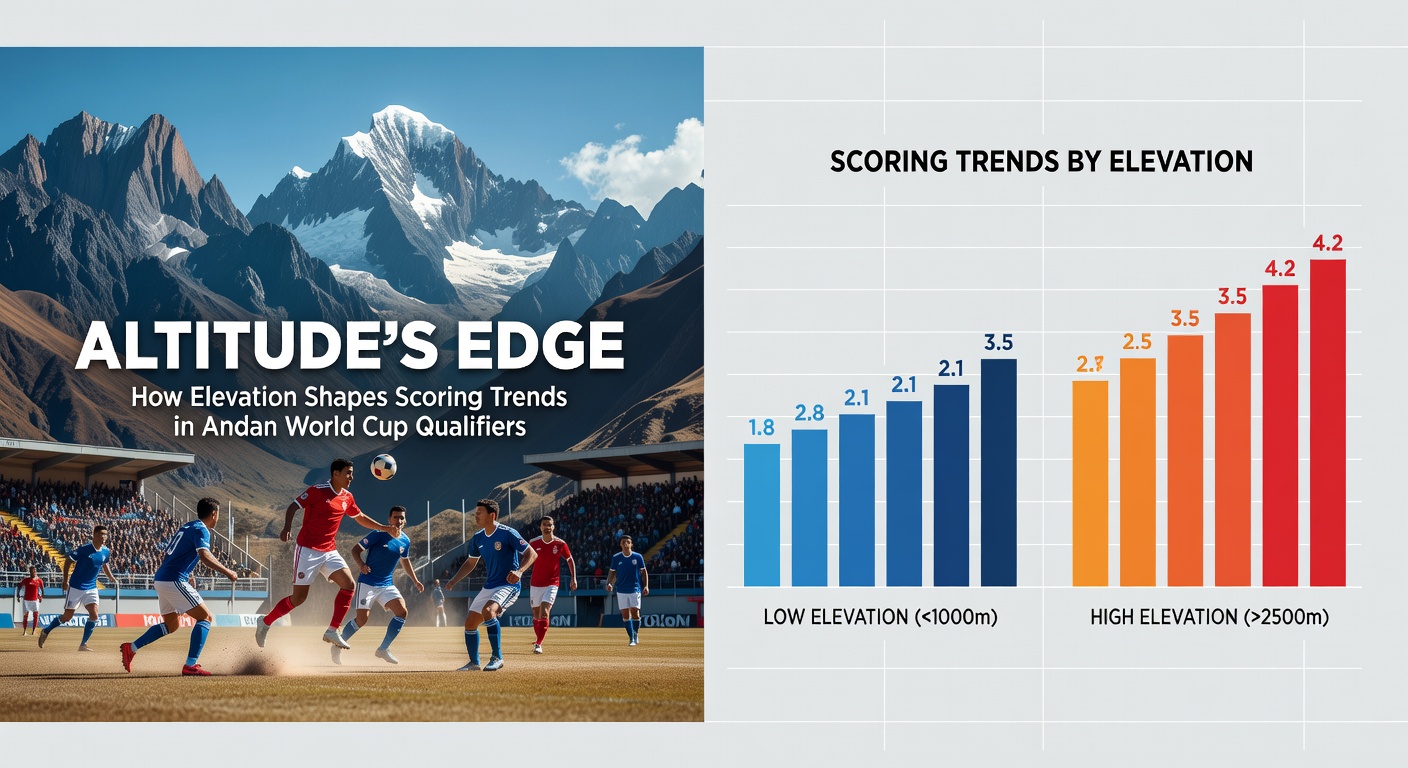
Teams across South America prepare for CONMEBOL World Cup qualifiers where stadium elevations range from sea level in Montevideo up to 3600 meters in La Paz, and those differences produce measurable shifts in scoring patterns. Data from recent cycles show home sides at the highest venues averaging 2.1 goals per match compared to 1.4 at lower sites, while visiting teams record fewer shots on target once the match passes the 60-minute mark.
Geography of Andean Venues
Bolivia hosts matches at Hernando Siles Stadium in La Paz and at Villa Tunari, both exceeding 3000 meters, whereas Ecuador uses Quito's Estadio Olímpico Atahualpa at 2800 meters and Peru features the national stadium in Lima near sea level alongside highland options in Cusco. Colombia plays some fixtures in Bogotá at 2600 meters, creating a gradient of conditions that teams encounter across a single qualifying window. FIFA and CONMEBOL scheduling places these venues throughout the campaign that runs through 2025 and into early 2026 ahead of the expanded tournament in June 2026.
Physiological Effects on Players
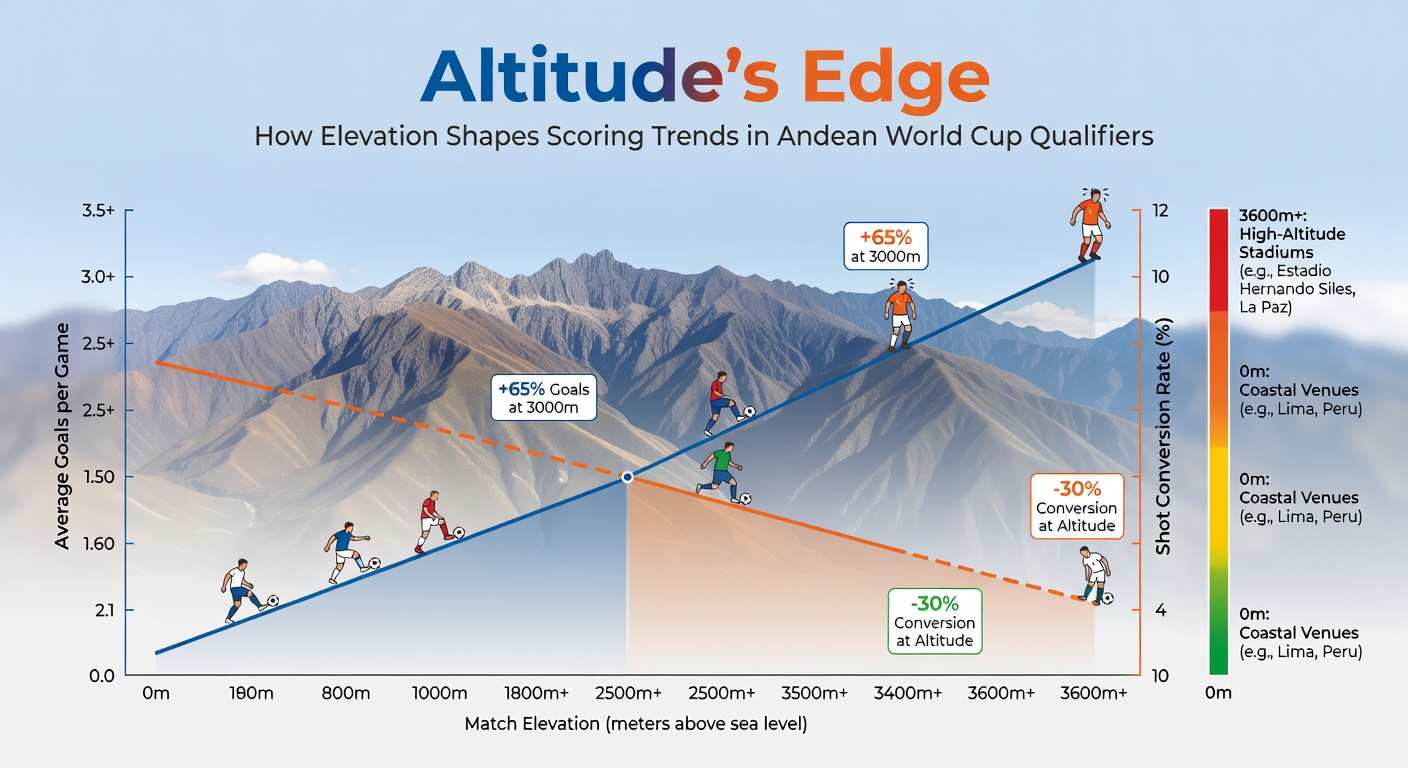
Reduced oxygen availability at these elevations decreases aerobic capacity, which researchers at the University of Colorado documented in studies of elite athletes showing a 10 to 15 percent drop in VO2 max above 2500 meters. Players from lowland nations experience quicker onset of fatigue, leading to shorter high-intensity running distances after the first half. The thinner air also allows the ball to travel farther when struck, increasing the frequency of long-range attempts that sometimes result in goals from outside the penalty area. Visiting squads often adjust training protocols by arriving several days early or using hypoxic tents, yet adaptation remains incomplete within the short windows between matches.
Scoring Trends Across Qualifiers
Match statistics compiled from CONMEBOL qualifiers between 2015 and 2024 reveal consistent patterns tied to elevation. At venues above 2500 meters, total goals per game average 3.0, driven largely by home-team strikes in the second half when opponents tire. Lowland visitors record 22 percent fewer completed passes in those conditions, according to Opta data referenced in regional analyses. Bolivia maintains an unbeaten home record in La Paz across the past three qualifying cycles, with 14 wins and three draws while scoring 38 goals and conceding 11. Ecuador shows similar dominance in Quito, where visiting sides have managed only 0.8 goals per match on average. Peru, when hosting at higher elevations, sees a spike in set-piece goals because defensive organization breaks down under fatigue. These figures hold across multiple cycles even as squad compositions change.
Case Examples from Recent Cycles
One notable fixture occurred when Argentina traveled to La Paz in 2023 and conceded three second-half goals after leading at the interval, a sequence repeated in earlier encounters. Brazil encountered comparable difficulties in Quito during the same cycle, managing only four shots on target across ninety minutes. Observers note that teams from Chile, which play home games near sea level in Santiago, frequently rotate personnel before highland trips to preserve fitness for the return leg. These patterns extend to the current window leading toward June 2026, where preliminary schedules already list multiple high-elevation dates in September and October 2025.
Preparation Strategies Employed by Teams
Coaching staffs employ several approaches to mitigate elevation effects. Some nations schedule training camps in comparable altitudes weeks before away fixtures, while others focus on hydration protocols and modified warm-up routines. The Brazilian confederation has referenced medical reports from the Brazilian Olympic Committee that detail oxygen supplementation methods permitted under FIFA rules. Argentina's staff, drawing on experience from previous cycles, emphasizes early pressing to exploit any initial advantage before acclimatization challenges intensify. Data from the South American Football Confederation indicates that teams using altitude-specific preparation reduce the goal differential against them by roughly 0.6 goals per match compared with those arriving with minimal adaptation time.
Broader Implications for Tournament Structure
CONMEBOL continues to review venue allocations ahead of the final qualification rounds, balancing competitive fairness with logistical demands. The confederation's technical reports highlight how elevation influences not only goal tallies but also injury rates, with muscle strains increasing 18 percent at the highest sites. As the 2026 World Cup approaches, these considerations shape squad selection and tactical planning for all ten member associations. Teams that master high-altitude conditions gain measurable edges in the tightly contested group standings that determine direct qualification spots.
Conclusion
Elevation remains a defining variable in Andean World Cup qualifiers, producing distinct scoring trends that persist across multiple cycles. Venues above 2500 meters consistently generate higher goal outputs for home sides and reduced output for visitors once fatigue sets in. Teams that account for these physiological realities through targeted preparation maintain better results, while those that overlook them encounter repeatable setbacks. The patterns documented in CONMEBOL records and independent physiological studies provide clear benchmarks for understanding how geography continues to shape outcomes in South American qualification campaigns.