Altitude's Hidden Hand in Shaping Score Expectations for Andean Encounters
Written by Kai Perry · Aug 24, 2026

Altitude's Hidden Hand in Shaping Score Expectations for Andean Encounters
High altitude venues across the Andes have long influenced football outcomes in South America, where matches in cities like La Paz, Quito, and Cusco present distinct physiological challenges that reshape scoring patterns and team preparations. Researchers from various sports science institutions have documented how reduced oxygen levels affect player endurance, recovery times, and tactical decisions during CONMEBOL competitions. Data from regional leagues shows that teams based at elevation often maintain higher possession statistics in the first half before fatigue sets in for visiting sides unaccustomed to the conditions.
Physiological Effects on Player Performance
Studies conducted by exercise physiologists indicate that athletes arriving from sea-level environments experience decreased aerobic capacity when competing above 2500 meters, which leads to slower sprint recoveries and reduced decision-making speed in later match stages. Observers note that this impact becomes particularly evident in fixtures scheduled for the latter part of the season when cumulative travel demands compound the stress. In August 2026, several World Cup qualifying matches are slated for Andean venues, and analysts expect teams to adjust their substitution patterns earlier than usual to manage these variables.
Acclimatization periods of at least 10 to 14 days have been shown in controlled trials to mitigate some performance drops, although many clubs lack the scheduling flexibility to implement such protocols fully. Figures from South American confederation records reveal that visiting teams score an average of 0.4 fewer goals per game when playing at elevations exceeding 3000 meters compared to their home statistics. This pattern holds across multiple seasons and appears consistent regardless of squad quality rankings.
Scoring Trends in High-Altitude Fixtures
Match data compiled over the past decade demonstrates that total goals in Andean derbies tend to cluster lower in the opening 30 minutes before accelerating in the final quarter as one side fatigues. Teams with deeper benches often exploit this window by introducing fresh attackers who capitalize on defensive lapses. What's interesting is how these trends differ between venues: matches in Quito at roughly 2800 meters show slightly higher scoring rates than those in La Paz, where the thinner air creates more pronounced effects on ball flight and player stamina.
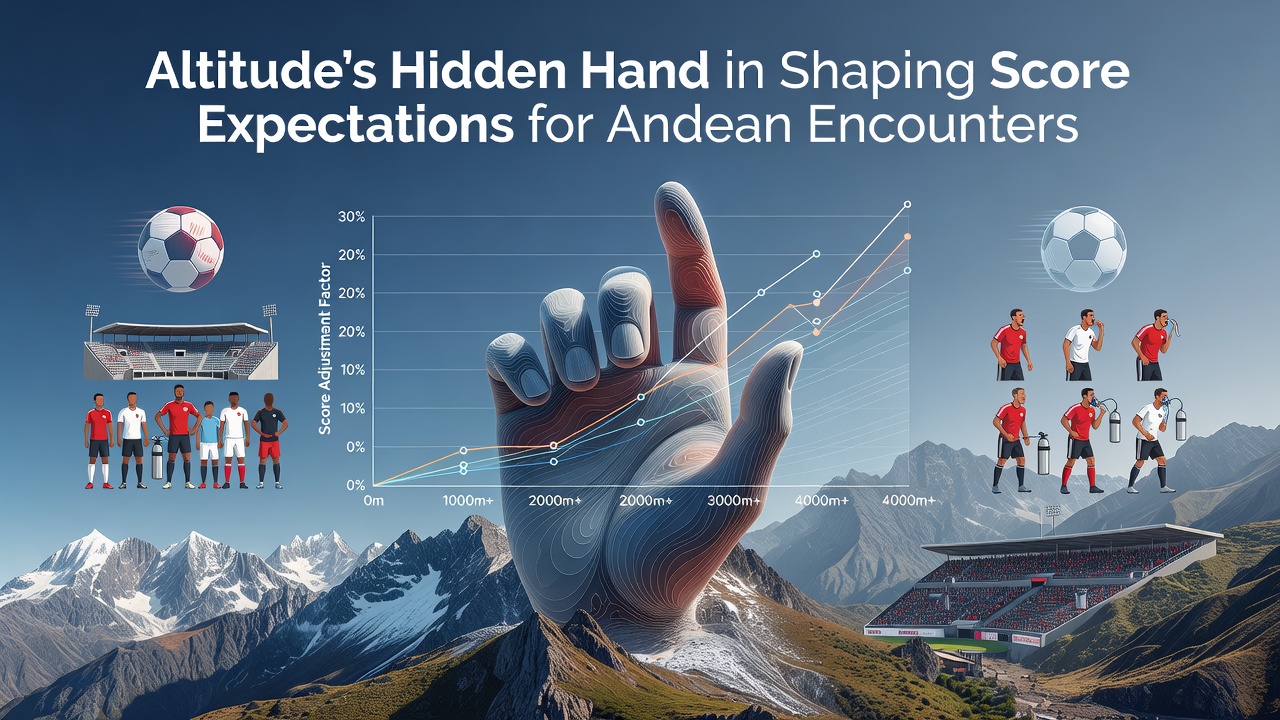
Coaches have adapted by emphasizing shorter passing sequences and set-piece routines that reduce the need for sustained high-intensity running. Research from the University of Colorado's sports performance lab highlights how hydration strategies and pre-match oxygen supplementation protocols can influence second-half output, although regulatory bodies in several nations continue to evaluate the fairness of such interventions. Those who've analyzed extensive datasets note that underdog sides from lower elevations occasionally secure results through compact defensive structures that limit open play opportunities.
Preparation and Tactical Adjustments
Clubs preparing for Andean encounters frequently incorporate altitude simulation chambers during training blocks, a practice documented in reports from Australian Institute of Sport collaborations with South American federations. These methods allow players to build tolerance without relocating entire squads weeks in advance. Scheduling around evening kickoffs has also gained traction because cooler temperatures partially offset the oxygen deficit, according to meteorological and performance correlation studies.
Historical records from Copa Libertadores campaigns show that teams returning from high-altitude trips require extended recovery windows before subsequent league fixtures, often resulting in rotated lineups. This ripple effect extends beyond the immediate result and influences squad management across domestic calendars. Data indicates that the home advantage margin widens when visitors have less than five days to acclimate, a situation that arises regularly during congested international windows.
Regional Variations Across Andean Countries
Bolivian venues present the most extreme conditions, while Ecuadorian and Peruvian highland stadiums offer slightly more moderate challenges that still alter expected scoring outputs. League-wide statistics compiled by CONMEBOL-affiliated analysts reveal distinct goal distributions depending on the specific elevation and pitch dimensions at each ground. Teams from coastal regions in these countries have developed specialized training regimens that incorporate hill sprints and respiratory exercises to prepare domestic players for these environments.
External factors such as travel logistics and jet lag further compound altitude effects when squads cross multiple time zones, a variable examined in studies published by Canadian sports medicine researchers. These combined stressors contribute to the observed variance in match outcomes that betting markets attempt to quantify through adjusted totals and handicap lines.
Conclusion
Altitude continues to serve as a decisive element in Andean football encounters, where physiological data, historical scoring records, and tactical adaptations combine to produce predictable yet nuanced patterns in match results. As fixtures approach in August 2026 and beyond, teams and analysts alike will continue monitoring these variables to refine preparation strategies and outcome projections.