Decoding Pitch Drainage Quirks and Their Sway Over Underdog Payouts in Lower-Tier English Cup Ties
Written by Erik Berger · Aug 26, 2026

Decoding Pitch Drainage Quirks and Their Sway Over Underdog Payouts in Lower-Tier English Cup Ties
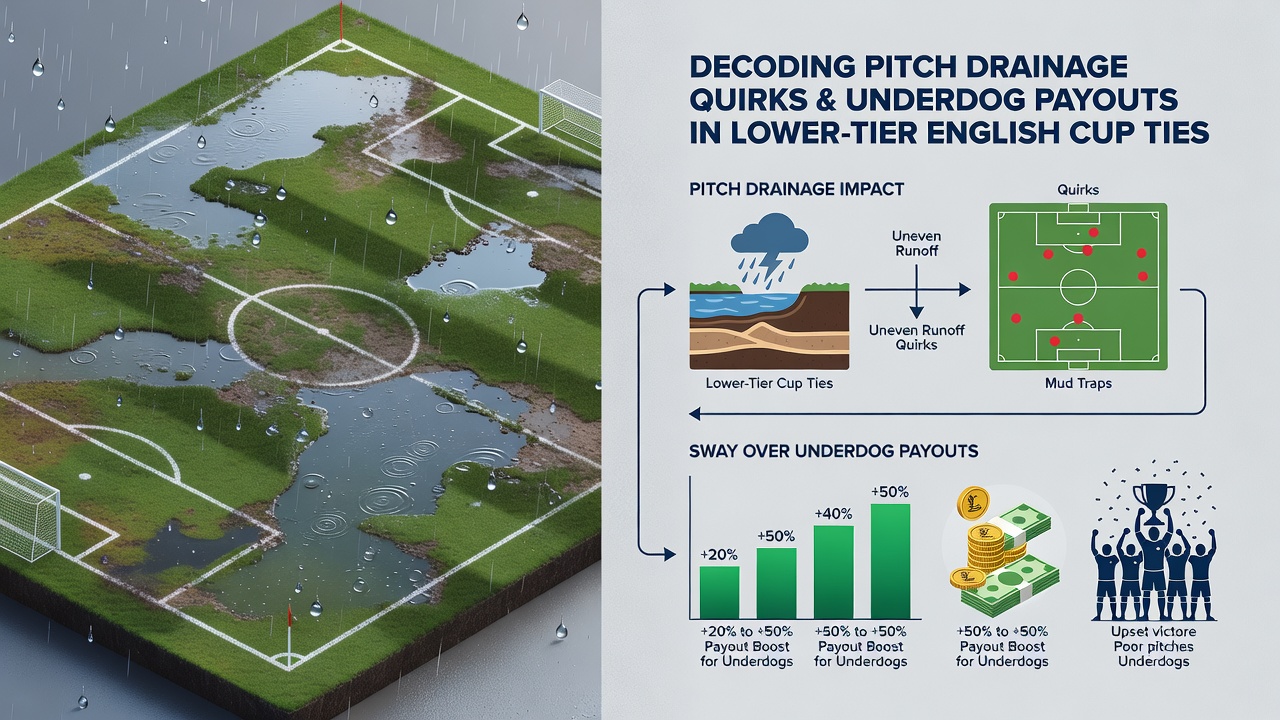
Pitch drainage quirks in lower-tier English cup ties create distinct playing conditions that shape match outcomes and betting market responses. Observers note how older grounds and non-league venues often feature uneven drainage systems that fail to handle heavy rainfall evenly across the surface. Data from recent seasons shows these inconsistencies produce slower ball rolls and altered player movement patterns compared to well-maintained professional pitches.
How Drainage Systems Differ Across Venues
Lower division clubs and amateur sides maintain pitches with varying levels of investment in drainage infrastructure. Some grounds rely on basic sand-based slits while others incorporate advanced pipe networks yet still suffer from compaction issues after years of use. Researchers at European sports turf institutes have documented that these differences lead to localized water pooling that affects specific areas of the field more than others. Matches scheduled in early rounds of the FA Cup or EFL Trophy frequently occur at such venues where drainage performance varies widely based on recent weather patterns.
August fixtures in particular highlight these quirks because pre-season groundworks often leave surfaces vulnerable before full establishment of grass roots. Teams visiting these grounds encounter conditions that differ markedly from their regular league environments. Figures from the Football Association indicate that cup ties at step 5 and below venues experience higher rates of postponements or pitch inspections due to drainage failures.
Effects on Playing Style and Scoring
Water retention changes how the ball travels and how players interact with it during lower-tier cup matches. Slower surfaces reduce the effectiveness of quick passing sequences and favor sides comfortable with physical, direct approaches. Analysts tracking historical results find that underdog teams from similar lower divisions secure results more frequently when pitch conditions limit high-tempo play from higher-ranked opponents.
Goal tallies drop noticeably on poorly drained fields according to match data compiled across multiple seasons. Defenders gain advantages from the reduced pace while attackers struggle to create space in heavier conditions. One study of non-league cup results revealed average goals per game falling by approximately 0.8 compared to equivalent league fixtures on better-drained surfaces.
Market Reactions and Underdog Payouts
Bookmakers adjust odds in response to anticipated pitch conditions once weather forecasts and venue reports become available. Lines on total goals move lower while prices on draws and away wins for underdogs shorten as the possibility of a low-scoring stalemate increases. Historical betting data demonstrates that these adjustments often create value opportunities when markets overreact to drainage concerns without accounting for how certain underdog sides adapt to such environments.
Live betting during matches on affected pitches shows rapid shifts once the extent of drainage issues becomes clear during the opening minutes. Punters monitoring early play notice how teams that press high struggle while compact defensive units maintain shape more effectively. Records from cup competitions indicate that underdog payouts improve when matches proceed on water-affected surfaces despite initial odds favoring favorites.
Seasonal Patterns and August 2026 Outlook
Drainage performance tends to fluctuate with seasonal rainfall patterns and maintenance schedules. Early season ties in August expose vulnerabilities because grounds have limited time to recover from summer use and reseeding efforts. Preparations for the 2026 campaign include several lower-tier venues upgrading their systems yet many smaller clubs continue operating with legacy infrastructure.
Those tracking these markets examine past August fixtures to identify recurring patterns where drainage quirks influenced results. Teams drawn against sides from better-equipped leagues encounter conditions that level the playing field in ways standard form analysis overlooks. Reports from turf management groups confirm that drainage effectiveness declines sharply after consecutive wet periods common in late summer.
Conclusion
Pitch drainage quirks in lower-tier English cup ties represent measurable factors that influence both on-field dynamics and subsequent market movements. Data compiled from multiple seasons illustrates how these conditions shift scoring rates and favor certain playing styles over others. Observers continue monitoring venue characteristics and weather developments to understand their combined impact on underdog performance across cup competitions.