How Broadcast Timing Shapes In-Play Market Movements During Overlapping European Weeknight Fixtures
Written by Ellis Lehmann · Aug 8, 2026
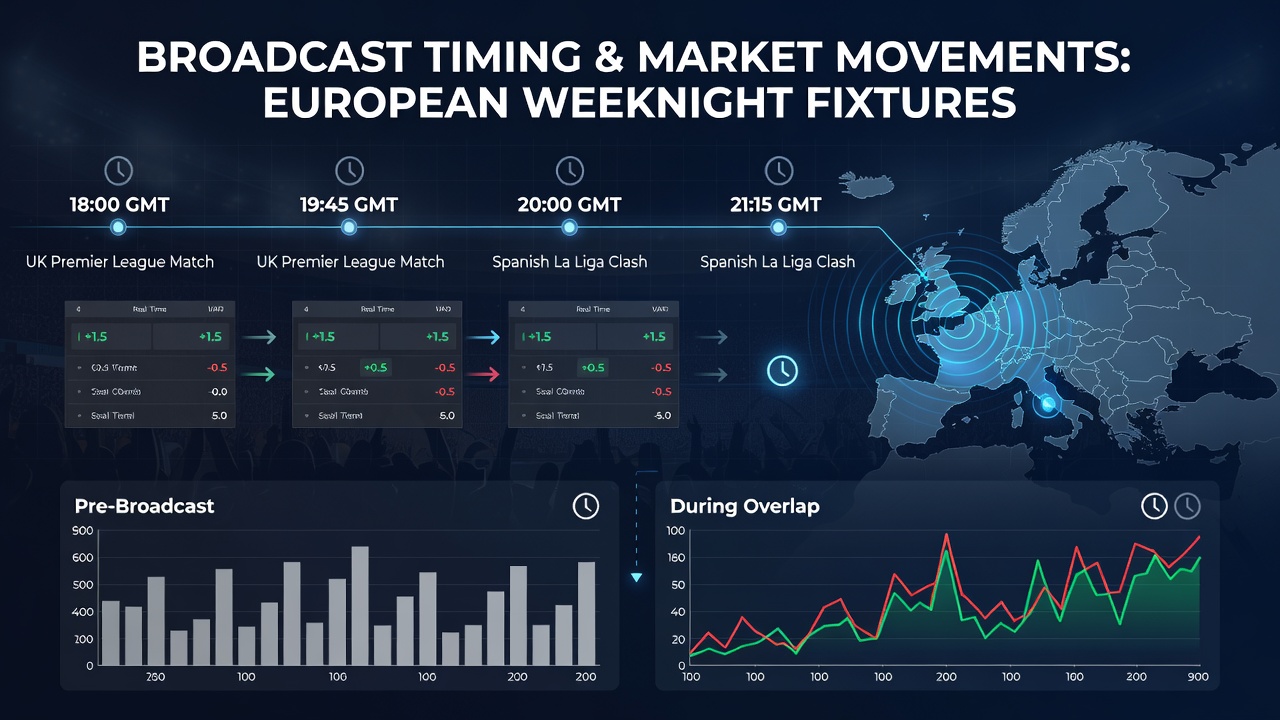
How Broadcast Timing Shapes In-Play Market Movements During Overlapping European Weeknight Fixtures
European football schedules pack multiple league fixtures into Tuesday and Wednesday evenings, creating simultaneous games that broadcasters must prioritize for live coverage. This selection process determines which matches receive early television exposure while others begin with delayed or limited broadcasts, directly affecting the timing of in-play betting activity across markets.
Overlapping Fixtures and Schedule Pressures
Leagues including the Premier League, Bundesliga, Serie A, and Ligue 1 often align midweek rounds to fit within a compressed calendar that accommodates domestic cups and European competitions. Data from the European Audiovisual Observatory indicates that broadcasters hold rights packages that force choices between high-profile clashes and lower-visibility encounters, resulting in staggered start times for live transmissions.
When two or more matches kick off within thirty minutes of each other, production teams allocate resources to the fixture expected to draw larger audiences. Observers note that this allocation leaves secondary games with commentary starting later or with fewer camera angles initially available, which in turn delays detailed statistical feeds reaching betting platforms.
Broadcast Delays and Market Liquidity
In-play markets rely on real-time data streams that update odds for goals, cards, corners, and possession. When a match receives primary broadcast focus, viewers gain immediate access to replays and expert analysis that prompt rapid bet placements. Secondary fixtures experience slower liquidity because fewer participants monitor developments until the main game reaches half-time or concludes.
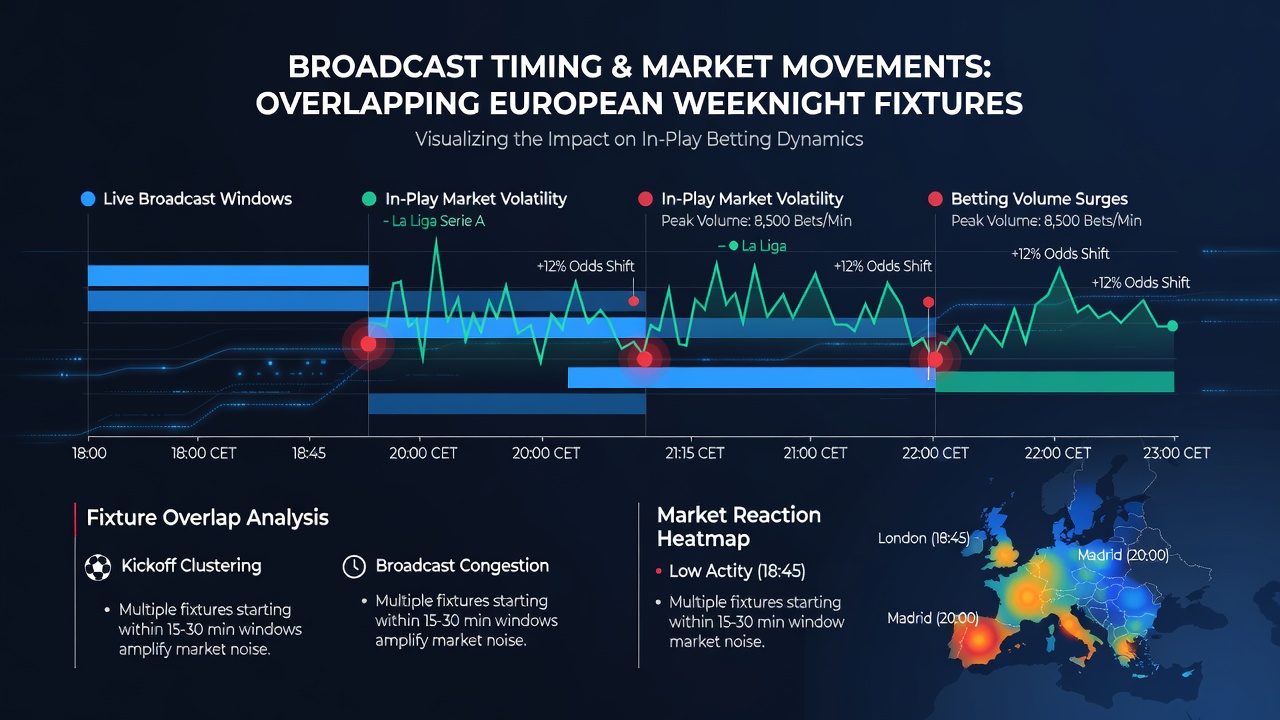
Research published by the University of Nevada Gaming Research Center demonstrates that betting volumes on televised matches increase by measurable margins within the first fifteen minutes of coverage compared with non-broadcast games. This pattern repeats across overlapping European nights, where the televised fixture absorbs the majority of early in-play wagers while parallel matches see steadier but lower activity until broadcast attention shifts.
August 2026 Season Patterns
The 2026-27 campaign opened with several midweek rounds featuring concurrent fixtures across top European leagues. Broadcasters applied new rights agreements that prioritized Premier League and Bundesliga encounters for prime slots, leaving certain Serie A and Ligue 1 games with later or partial coverage. Figures from industry monitoring services reveal that goal-related markets in the primary broadcast games moved more sharply immediately after scoring events, whereas equivalent markets in delayed broadcasts adjusted more gradually as information filtered through alternative streams.
Those who track market depth report that overlapping schedules create temporary imbalances where one match dominates liquidity. When a goal occurs in the non-televised game first, odds may linger before bettors react in volume, allowing brief windows of value that close once the broadcast switches focus or half-time analysis begins.
Viewer Attention and Betting Behavior
Attention concentrates on the match with live pictures and commentary, leading participants to place bets during visible moments such as set pieces or VAR reviews. Secondary games receive attention only through score updates or social media alerts, which arrive with variable speed depending on the broadcaster's production schedule. This attention disparity produces measurable differences in the speed and magnitude of odds adjustments across simultaneous fixtures.
Industry reports from the European Gaming and Betting Association highlight that platforms adjust risk management protocols during overlapping windows, widening spreads or limiting stakes on less visible matches until broadcast coverage equalizes. Such adjustments reflect observed patterns in bet flow rather than any prediction of outcomes.
Technical and Production Factors
Camera feeds, graphics overlays, and commentary teams require time to synchronize across multiple venues. When one production truck handles two or more venues through split coverage, the delay between an event and its visual confirmation lengthens. Bettors using video-based decision making therefore cluster activity around the game receiving dedicated coverage, reinforcing the cycle of uneven market movement.
Conclusion
Broadcast timing decisions during overlapping European weeknight fixtures create distinct patterns in in-play market activity. Primary coverage accelerates liquidity and sharpens odds responses in selected matches, while delayed or secondary broadcasts experience slower, more measured adjustments. Data collected across multiple seasons, including the opening weeks of August 2026, consistently shows these timing effects shape where and when significant market movements occur.