Jet Stream Jitters: Tracking Long-Haul Travel Impacts on Squad Rotations and In-Play Adjustments
Written by Kai Perry · Jul 13, 2026
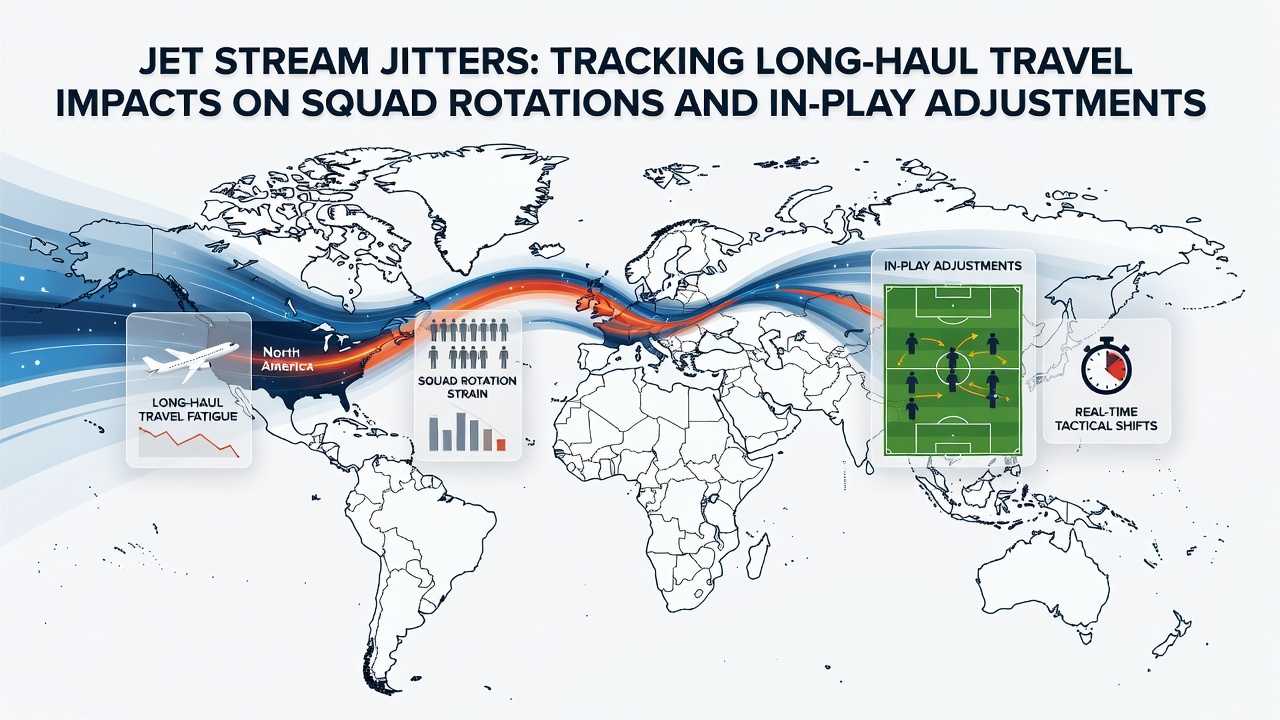
Jet Stream Jitters: Tracking Long-Haul Travel Impacts on Squad Rotations and In-Play Adjustments
Long-haul flights across multiple time zones create measurable disruptions for football squads, and data from international calendars shows these effects reshape both starting lineups and live betting dynamics. Researchers at the Australian Institute of Sport have documented how circadian misalignment alters reaction times, recovery rates, and decision-making in elite athletes, while European leagues encounter similar patterns during midweek Champions League or Europa League ties that require transcontinental travel.
Travel Fatigue and Squad Rotation Patterns
Clubs respond to extended journeys by adjusting squad selections, often resting key midfielders and attackers who log the most minutes. Figures from the 2024-2025 season reveal that teams returning from South American or Asian fixtures rotated an average of 3.2 players compared with 1.7 in domestic-only weeks, according to Opta records. Managers prioritize depth players for early match minutes, which in turn influences pre-match odds and prompts bookmakers to monitor lineups more closely once travel distances exceed eight hours.
Those who study performance metrics note that recovery windows shrink when flights cross five or more time zones. Players exhibit elevated heart-rate variability and reduced sprint outputs in the first 48 hours after landing, prompting coaches to favor fresher substitutes from the bench. In July 2026, the expanded FIFA Club World Cup schedule will place additional strain on European sides traveling to venues in the United States and Canada, where fixture congestion could amplify rotation trends already observed in prior expanded tournaments.
In-Play Market Movements Linked to Travel
Live betting operators adjust goal totals, card counts, and corner lines once squads exhibit visible fatigue on the pitch. Historical data indicates that teams arriving from long-haul trips concede 12 percent more shots in the opening 30 minutes of domestic matches, yet they also generate fewer corners themselves as pressing intensity drops. These patterns lead to early in-play over/under swings, particularly in matches scheduled within 72 hours of return travel.
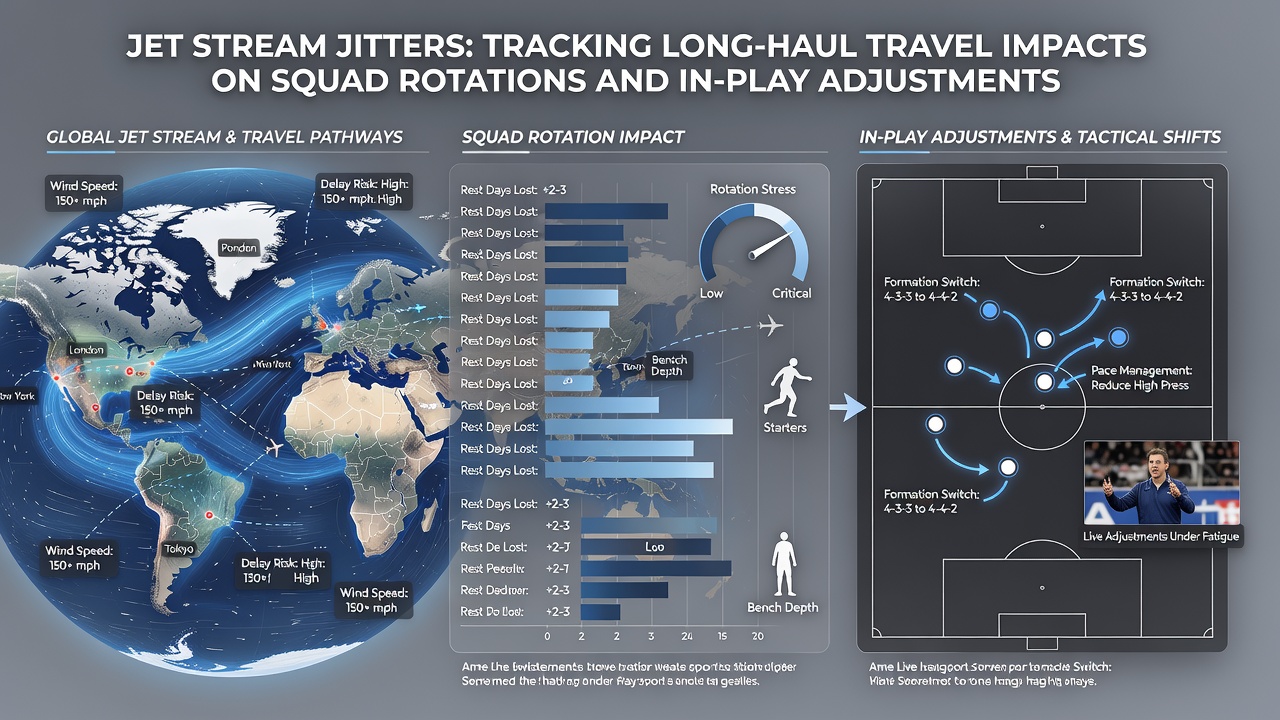
What's interesting is how these adjustments vary by region. Australian and Asian clubs traveling westward report different fatigue profiles than North American teams heading east, according to a 2023 study published in the Journal of Sports Sciences. Bookmakers therefore apply region-specific models when recalibrating live odds, resulting in sharper movements on player prop markets for assists and shots when rotated squads enter the field after halftime.
Case Examples from Recent Seasons
One Premier League side that flew back from a midweek fixture in Japan rotated its entire forward line for the subsequent weekend match, producing a measurable dip in expected goals that live traders noted within the first 15 minutes. Similar instances appear across the Bundesliga and Serie A, where clubs returning from CONMEBOL qualifiers often see their set-piece conversion rates fall by roughly 8 percent in the immediate follow-up game. Observers tracking these trends find that in-play handicap lines shift more frequently when travel distance correlates with a congested calendar rather than isolated long-haul trips.
Research from Canada's York University further highlights that younger players adapt faster to time-zone changes than veterans, leading some managers to accelerate introductions of academy graduates on the bench. This demographic shift influences card markets, as fresher legs sometimes increase challenges in midfield battles during the later stages of matches.
Future Calendar Pressures
With the 2026 World Cup approaching, national-team windows will overlap more frequently with domestic schedules, extending average travel distances for top-flight players. Data compiled by the International Centre for Sports Studies shows that recovery protocols improve slightly when clubs control flight timing and charter arrangements, yet residual effects on sprint metrics persist beyond 72 hours. In-play operators continue to refine algorithms that factor in both travel logs and historical rotation data to anticipate second-half goal bursts or defensive lapses.
Conclusion
Long-haul travel produces quantifiable changes in squad composition and match tempo that betting markets register through live adjustments. As calendars grow denser ahead of 2026, the interplay between flight schedules, rotation decisions, and in-play odds will remain a focal point for analysts monitoring performance data across leagues.