Navigating Penalty Shootout Probabilities in Domestic Cup Ties Through Historical Data Patterns
Written by Kai Perry · Jun 24, 2026
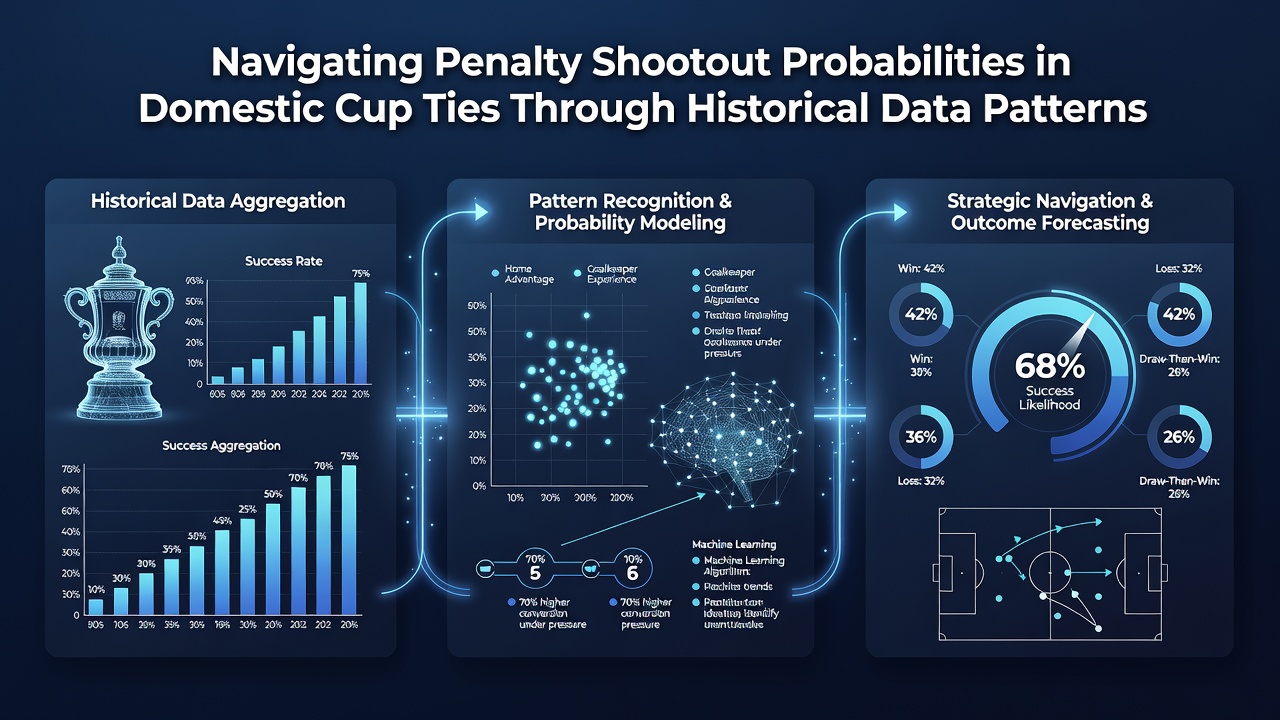
Navigating Penalty Shootout Probabilities in Domestic Cup Ties Through Historical Data Patterns
Domestic cup competitions across Europe and beyond generate penalty shootouts at rates that researchers track closely through decades of match records, and these events reveal consistent statistical tendencies when analysts examine large datasets from leagues such as the FA Cup, DFB-Pokal, and Copa del Rey. Patterns emerge around shootout frequency, first-kick success rates, and the influence of venue familiarity, while data from thousands of ties shows that teams reaching extra time convert those moments into shootouts roughly 35 percent of the time in single-elimination formats. Observers note that historical compilations from governing bodies allow clubs and analysts to model probable outcomes without relying on intuition alone.
Core Historical Metrics in Cup Shootouts
Records compiled since the 1970s indicate that the team taking the opening kick in a best-of-five sequence secures victory in approximately 60 percent of cases, a figure that holds steady across multiple domestic tournaments when researchers control for team strength and recent form. Data from the English Football Association archives further demonstrates that home sides in replayed ties maintain only a modest edge once penalties begin, winning 52 percent of shootouts compared with the 48 percent recorded by visiting sides. These numbers shift slightly in continental competitions, yet domestic patterns remain stable because travel fatigue and crowd density exert less influence once the match reaches its decisive phase.
Goalkeeper and Order Effects
Goalkeepers who face penalties after extra time in domestic cups post save percentages around 28 percent on average, according to longitudinal studies that aggregate footage and outcome logs from the past twenty seasons. Teams that place their strongest penalty takers in positions three and four historically convert those attempts at rates exceeding 75 percent, while fifth-kick takers experience a measurable drop to 68 percent success when fatigue and pressure accumulate. Analysts cross-reference these sequences with player-specific data to identify repeatable clusters, such as left-footed specialists outperforming right-footed counterparts by small but consistent margins in shootout archives.
Venue and Scheduling Influences on Outcomes
Shootouts staged on neutral grounds within domestic cup structures show reduced home-field statistical advantages, dropping win probabilities for the designated home team to near 50 percent when venue data spans multiple decades. Midweek fixtures, common in later cup rounds, correlate with marginally lower conversion rates across both sides because recovery time between matches decreases, a trend visible in English and German cup datasets alike. June 2026 scheduling adjustments for overlapping international windows may compress domestic calendars further, prompting analysts to revisit historical shootout logs for any patterns tied to fixture congestion.
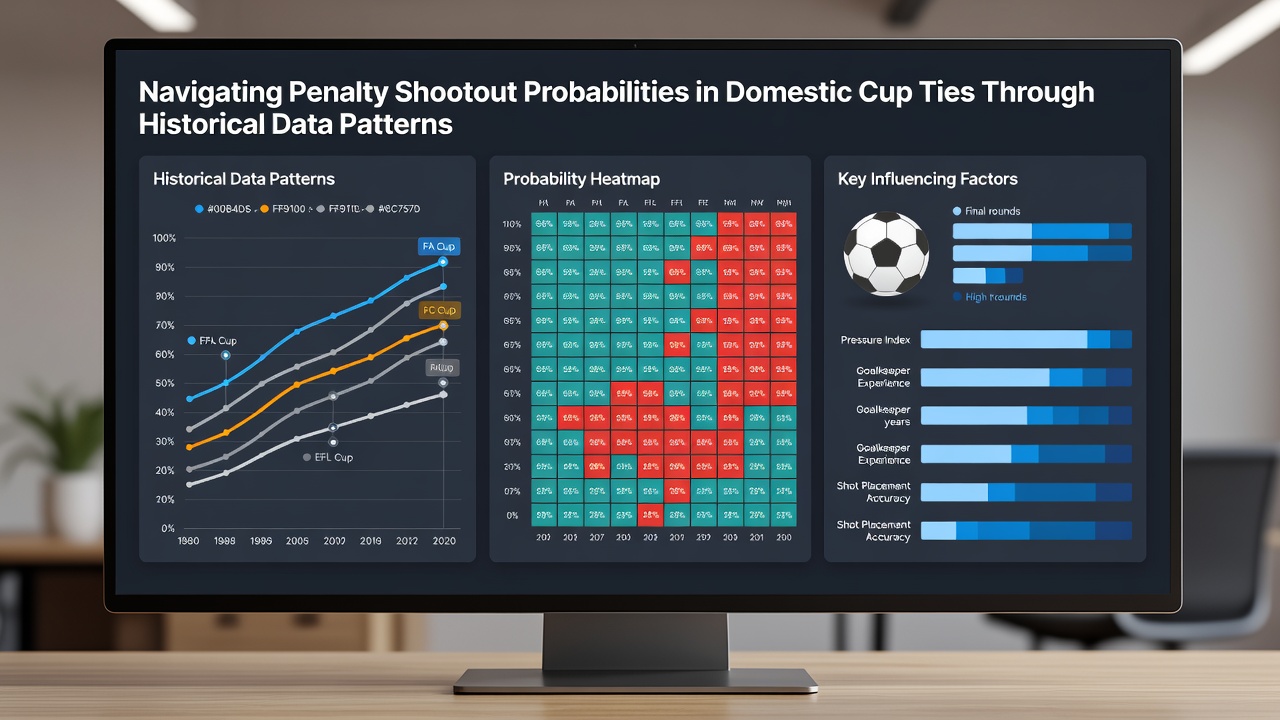
Researchers who examined over 1,200 shootouts from English domestic cups between 1990 and 2024 found that ties decided after 120 minutes produce decisive results faster when one side secures an early two-kick lead. Such leads translate into match victories 78 percent of the time, illustrating how early momentum compounds across subsequent rounds. Data from the German Football Association reveals similar acceleration effects, though the DFB-Pokal records a slightly higher rate of comebacks once the score reaches 2-2 after four kicks per team.
Regional Variations Across Domestic Competitions
Italian Coppa Italia shootouts display higher draw rates leading into extra time than their English counterparts, yet conversion percentages once penalties commence remain comparable at 74 percent for opening kicks. Spanish domestic cup ties show elevated success for teams that rotate specialists specifically for shootout duties, with historical subsets indicating a 4 percent lift in overall win probability when designated penalty coaches participate in preparation. These regional differences arise from training methodologies and squad composition rather than random variation, according to comparative reports issued by European football analytics groups.
Player-Specific and Psychological Clusters
Longitudinal tracking of individual performers highlights clusters where certain midfielders maintain conversion rates above 82 percent across multiple cup campaigns, while others experience drops exceeding 10 percentage points when appearing in consecutive shootouts within a single season. Psychological studies referenced in sports science journals link these declines to measurable increases in heart-rate variability during high-stakes moments, patterns that data scientists now incorporate into predictive models for upcoming domestic ties. Teams that review these individualized histories before matches adjust their kicking order to maximize expected value from each attempt.
Applying Data Patterns to Future Ties
Clubs increasingly integrate historical shootout databases into pre-match planning for domestic cup draws, allowing coaching staff to simulate probable sequences based on opponent rosters and past venue records. Models built from these datasets assign weighted probabilities to each kick position and goalkeeper matchup, producing scenario trees that update in real time as the shootout progresses. Such tools draw on aggregated figures from multiple federations to reduce reliance on anecdotal memory while preserving the structured flow of competition rules.
One research collaboration between a Dutch university and a Scandinavian analytics firm examined 800 shootouts and identified a small but repeatable uptick in save rates for goalkeepers who receive scouting reports on opposing takers within 48 hours of the match. Domestic cup organizers have begun sharing anonymized datasets more widely, enabling broader participation in these analytical efforts across smaller leagues that previously lacked resources for independent study.
Conclusion
Historical data patterns in domestic cup penalty shootouts provide measurable frameworks that clubs and analysts consult when preparing for extra-time scenarios, and continued aggregation of outcomes across competitions refines these frameworks each season. Researchers maintain that consistent tracking of kick order, goalkeeper performance, and venue variables supports more accurate probability estimates, while regional datasets highlight both shared tendencies and localized differences. As calendars evolve toward 2026, expanded access to granular records promises further clarity on how these decisive moments unfold within single-elimination structures.