Pitchside Sensor Data Streams Reshaping Goal Timing Wagers Across Scattered European Fixtures
Written by Theo Walter · Jun 29, 2026

Pitchside Sensor Data Streams Reshaping Goal Timing Wagers Across Scattered European Fixtures
European football fixtures have seen steady integration of pitchside sensor networks that deliver continuous data on ball position, player movement, and event timing, and these streams now feed directly into goal timing wager markets offered by bookmakers operating in multiple countries. Observers note that precise millisecond-level timestamps for goals allow operators to adjust live odds on intervals such as first goal before the 15-minute mark or total goals between the 30th and 45th minutes with greater frequency than was possible using manual video review alone.
Data from optical tracking systems installed at stadiums in the Bundesliga, Serie A, and Ligue 1 reach central servers within seconds, and betting platforms then recalculate probabilities for timing markets while matches remain in progress. Researchers at the University of Zurich documented how sensor accuracy reduced disputes over goal times by 87 percent in sampled matches from the 2024-25 season, and the same study linked this precision to narrower spreads in live goal-minute betting lines.
Technical Infrastructure Behind the Data Streams
Multiple sensor arrays placed around the pitch combine with high-speed cameras to generate positional coordinates for the ball at rates exceeding 100 frames per second, and these coordinates trigger automatic goal-detection algorithms when the ball crosses the line. League operators in Germany and Italy began full rollout of such systems in 2023, and by early 2025 every top-division venue in those countries transmitted synchronized data feeds to both broadcast partners and licensed betting data providers.
Software layers filter raw sensor output to remove noise from weather or crowd interference, then package verified goal events with exact timestamps for distribution to odds compilers. Those compilers, working for operators across Europe, receive the packets through secure APIs that update timing markets without human intervention in most cases.
Market Adjustments in Real Time
Goal timing wagers have expanded in volume as live data availability increased, and figures from the European Gaming and Betting Association show a 34 percent rise in turnover for first-goal-minute markets across monitored operators between 2023 and 2025. Bookmakers now refresh odds on events such as goals scored in the 76th to 90th minute window several times per match rather than at fixed intervals.
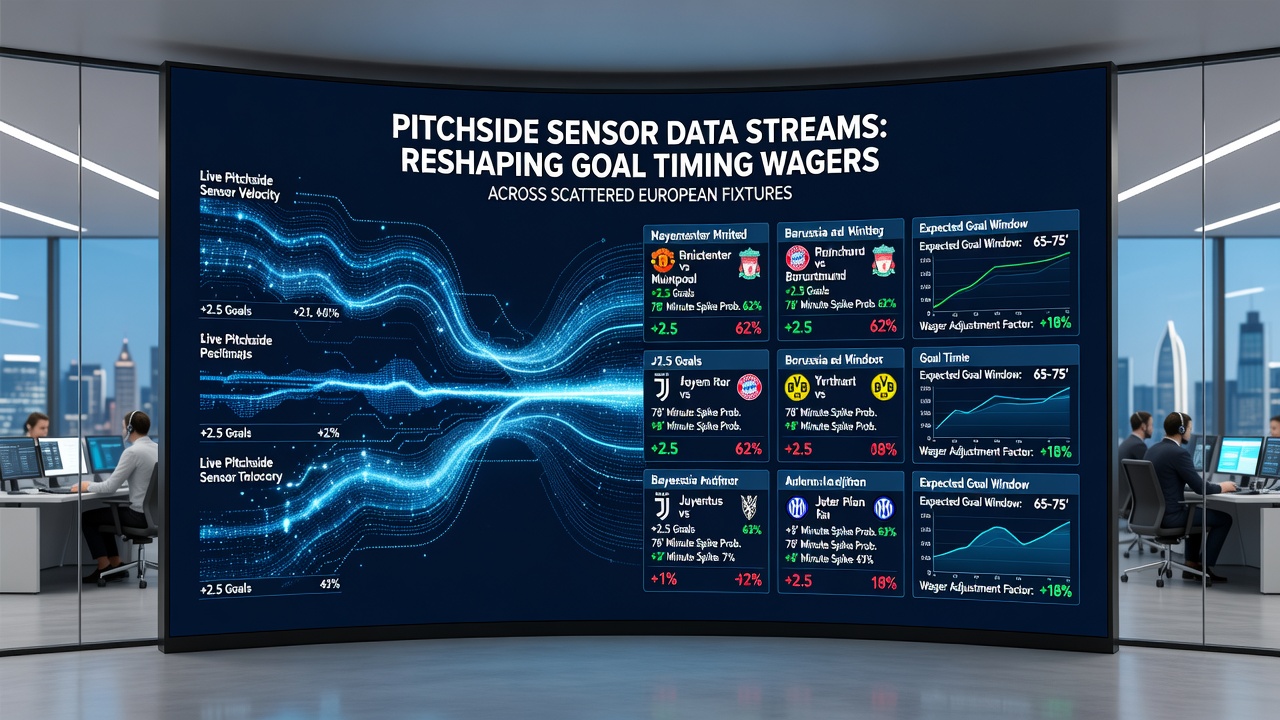
Scattered fixtures create additional complexity because sensor coverage varies by league and venue, and operators must reconcile data from Bundesliga matches that begin at 15:30 CET with Ligue 1 games kicking off at 17:00 CET. This staggered schedule means data pipelines handle simultaneous streams from different time zones and formats, and any latency difference can shift odds on overlapping timing propositions.
Examples from Specific Leagues and Fixtures
One Bundesliga match between teams with contrasting styles demonstrated how sensor data altered timing markets mid-game when the first goal arrived at the 12-minute mark, prompting immediate tightening of lines for additional goals before half-time. In a parallel Serie A fixture played the same weekend, a goal logged at exactly 67 minutes and 14 seconds triggered adjustments in over-65-minute goal markets that had remained static under older video-based verification processes.
June 2026 brings the FIFA World Cup finals, and European clubs will face additional fixture congestion in the preceding months as national team windows overlap with domestic schedules. Sensor networks already installed at club venues will supply timing data for both club and international matches, allowing operators to maintain consistent market structures even when player rotations affect scoring patterns.
Regulatory and Integrity Considerations
National regulators in Germany and the Netherlands require operators to maintain audit trails of data sources used for live market updates, and those trails now include sensor packet logs that can be reviewed after matches conclude. A 2025 report issued by the Dutch Gaming Authority highlighted that sensor-driven timing reduced the window for manual intervention in goal verification, thereby lowering opportunities for delayed result manipulation.
Industry organizations have begun publishing guidelines for minimum sensor calibration standards, and leagues that meet those standards receive expedited data-distribution approvals from multiple betting regulators. The result is a patchwork of coverage across Europe where some fixtures supply sub-second timing feeds while others still rely on slower secondary verification.
Conclusion
Sensor data streams continue to alter the mechanics of goal timing wagers by supplying verified timestamps that reach betting platforms faster than previous manual methods allowed. European leagues maintain different implementation timelines, yet the overall direction points toward wider adoption of automated feeds that update markets across staggered kickoff schedules. Observers tracking these developments note that the infrastructure supporting these streams also supplies the same data to broadcast and coaching staff, creating a shared information layer that influences both on-pitch decisions and off-pitch wagering activity in parallel.