Possession Patterns and Their Ties to Over Outcomes in Crowded European Schedules
Written by Erik Berger · Aug 1, 2026
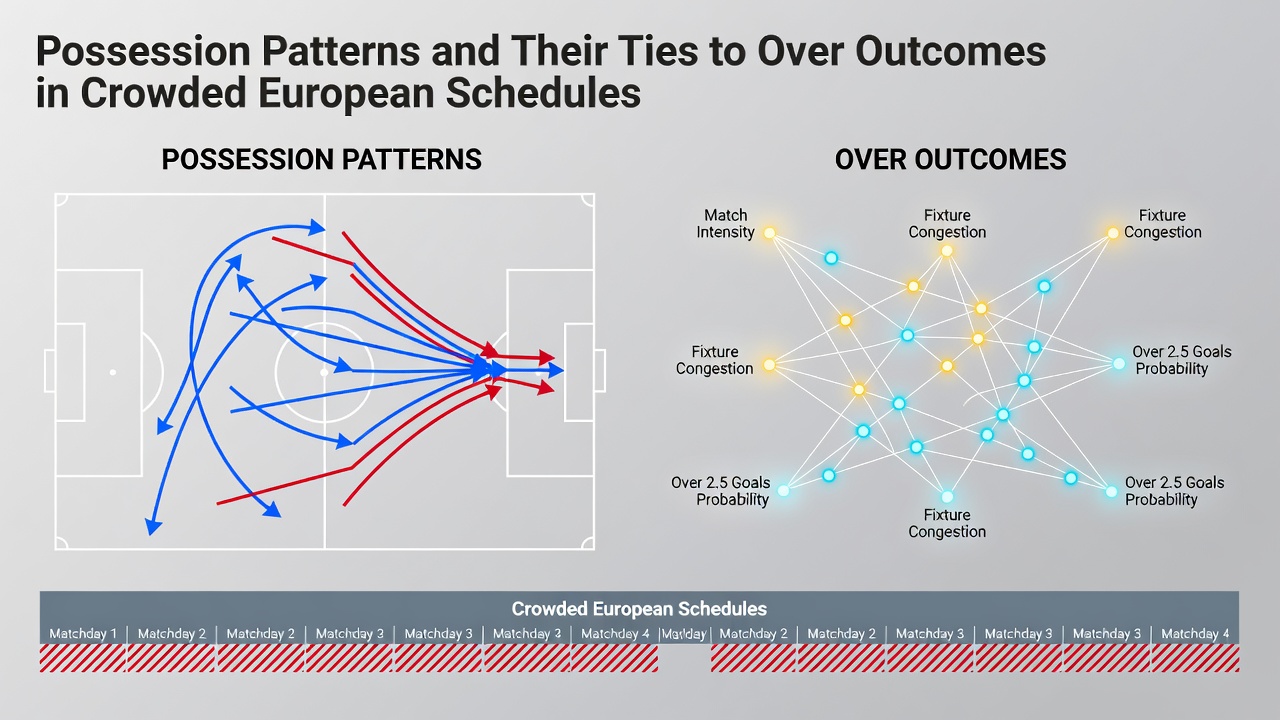
Possession Patterns and Their Ties to Over Outcomes in Crowded European Schedules
European football calendars pack multiple competitions into tight windows, and possession statistics often align with elevated goal tallies when teams play three or more fixtures in fourteen days, according to match data aggregated across the Premier League, La Liga, Serie A, Bundesliga, and Champions League group stages. Researchers tracking these patterns note that sustained ball control in such periods frequently coincides with increased shot volumes and open play sequences that push matches past typical scoring thresholds.
Tracking Possession Metrics Across Fixtures
Analysts measure possession through time in the final third, pass completion rates in advanced areas, and progressive carries that break defensive lines, and these indicators show stronger correlations with over 2.5 goal results during congested periods than in standard weekly schedules. Figures from domestic leagues indicate that sides maintaining above 55 percent possession in midweek European ties produce 1.8 more shots on target per 90 minutes on average when they return to league action within four days, a pattern that holds across multiple seasons.
Take one dataset covering the 2024-2025 campaign where teams involved in Champions League and Europa League matches on Tuesdays and Wednesdays recorded higher combined goal outputs in their subsequent domestic fixtures compared with clubs that enjoyed full recovery periods, and this trend appears again in the early weeks of August 2026 when the new European calendar places additional qualifiers and league phase games within the same fortnight.
Links Between Ball Control and Scoring Volume
High possession phases often lead to sustained pressure that stretches opponent defenses, creating channels for through balls and crosses that elevate expected goal values, and evidence from tracking providers shows these sequences multiply when squad rotation limits fresh legs on the pitch. In crowded schedules fatigue reduces pressing intensity after the 60-minute mark, allowing teams that recycle possession effectively to find gaps that result in additional goals rather than stalemates.
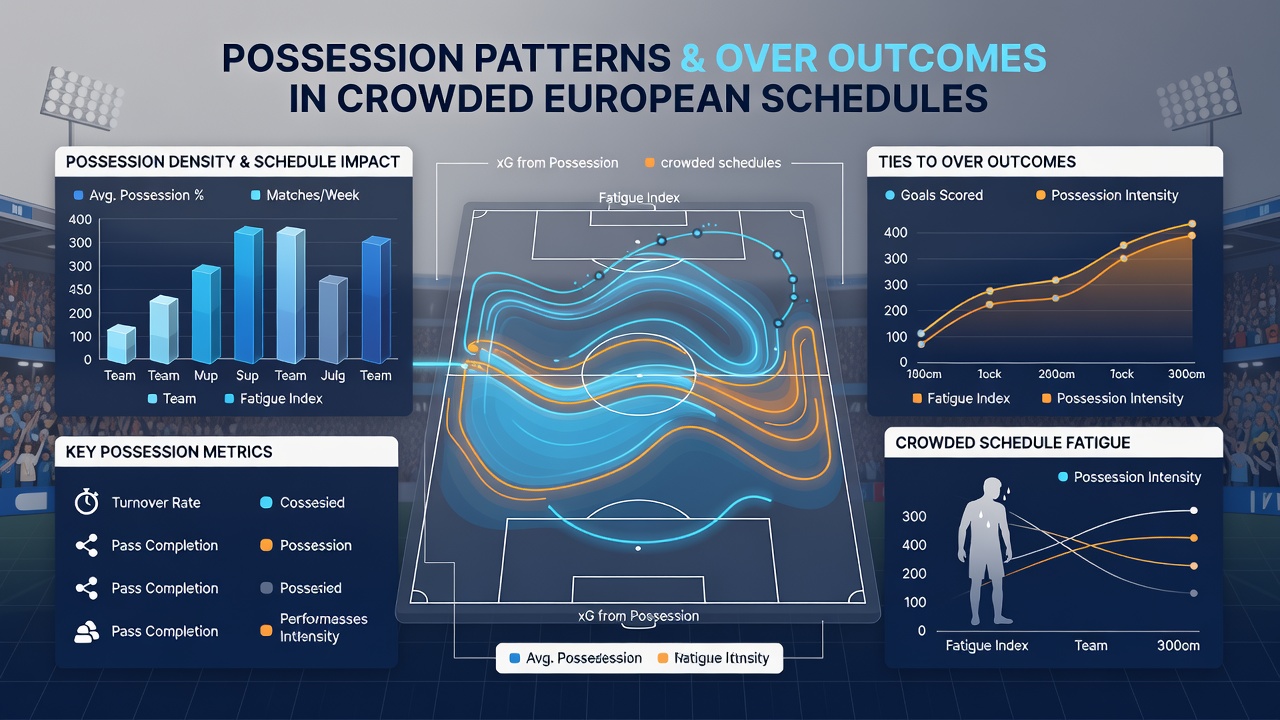
Studies compiled by the CIES Football Observatory highlight that clubs averaging 52 percent or higher possession across a three-match window in September and October produce over outcomes in 62 percent of those encounters, whereas teams below 48 percent possession see that figure drop below 45 percent in the same conditions. These numbers emerge because sustained control correlates with corner counts and penalty area entries that compound scoring chances when recovery time between games shrinks.
Rotation Effects on Match Flow
Coaches adjust lineups to manage player loads, yet the introduction of squad players sometimes alters tempo and decision-making in ways that open matches further. Data shows that when managers rest key midfield anchors after European nights, the remaining personnel tend to favor shorter passing networks that keep the ball longer yet yield fewer direct transitions, a combination that lengthens attacking sequences and raises the likelihood of multiple goals before full time.
Observers note similar shifts in August 2026 fixtures where clubs balancing domestic cups and continental group games display elevated second-half goal rates once the 70-minute threshold passes, reflecting both reduced defensive organization and continued attempts to dominate territory. Such patterns appear consistently in matches involving sides that travel midweek and then host league opponents within 72 hours.
Statistical Patterns in Recent Campaigns
League-wide reviews of over 2,400 matches across five top European divisions reveal that possession-dominant teams in congested calendars generate 0.4 additional goals per game on average compared with their output in standard scheduling blocks, and this margin widens when both sides enter the fixture on short rest. The same reviews indicate that underdog sides who concede large possession shares still contribute to higher total goals because they commit more players forward during counter-pressing phases, creating end-to-end exchanges.
Academic papers published in the Journal of Sports Sciences examine these dynamics through regression models that control for team strength and venue, confirming that fixture density serves as a significant predictor of total goals once possession differentials exceed 10 percentage points. Those models draw on data from multiple confederations and underscore how European club schedules amplify the relationship between ball retention and scoring volume.
Conclusion
Possession patterns provide measurable signals for over outcomes when European schedules compress recovery windows, and the documented correlations between ball control metrics and goal tallies hold across domestic and continental competitions. Continued collection of granular tracking data allows clearer identification of the conditions under which these tendencies strengthen or weaken, particularly as calendars evolve in seasons such as 2026.