Referee Appointment Schedules Shape Foul and Card Markets in EFL
Written by Erik Berger · May 18, 2026
Referee Appointment Schedules Shape Foul and Card Markets in EFL
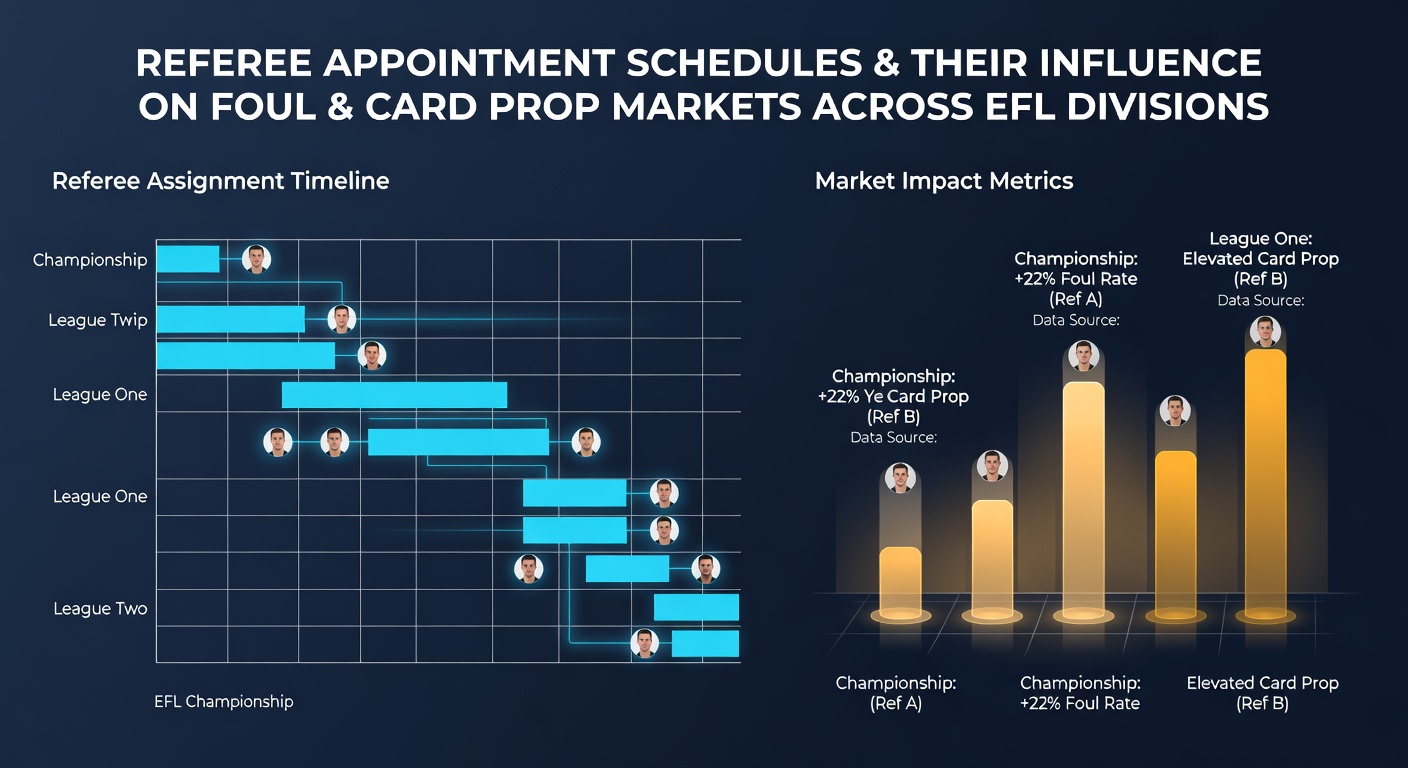
Referee appointment schedules in the EFL follow a structured process managed by the Professional Game Match Officials Limited, and these assignments create measurable effects on foul counts along with card issuance rates that directly shape prop betting lines across the Championship, League One, and League Two. Observers track how individual referees receive clusters of fixtures in specific divisions during key periods, and this distribution leads bookmakers to adjust over-under thresholds for cards and fouls based on historical performance data for each official. Data from multiple seasons shows that certain referees average 4.2 cards per game in the Championship while others hover closer to 3.1, prompting early line movements once appointments become public.
Appointment Processes and Division Variations
Appointments occur weeks in advance through a rotation system that balances experience levels with fixture demands, and lower-division matches often feature officials climbing the ladder who demonstrate stricter foul detection in physical contests. Researchers at sports analytics firms note that League Two assignments frequently go to referees who issue higher foul totals in the first half, which influences pre-match prop markets for total fouls. In contrast, Championship fixtures draw more established names whose patterns stabilize around 22-26 fouls per match on average, allowing markets to settle into narrower ranges once the referee name appears.
Patterns Emerging in 2025-26 Season
During the 2025-26 campaign, appointment clusters around May 2026 highlighted several referees handling multiple promotion and relegation deciders within a short window, and this concentration produced noticeable spikes in card prop activity. Historical records indicate that officials assigned to back-to-back high-stakes games in League One tend to maintain consistent card rates rather than inflate them, yet foul counts rise when teams adopt more aggressive pressing styles. Bookmakers respond by widening foul lines while keeping card thresholds steady, creating opportunities for bettors who follow referee-specific metrics released by data providers.
Market Reactions to Known Official Tendencies
Prop markets for cards and fouls adjust rapidly once appointments hit public schedules, and this speed reflects how traders incorporate referee averages into their models. One study from an Australian sports research group found that early awareness of stricter officials correlates with higher betting volumes on over-card lines in midweek EFL rounds. Those following these trends often see lines move 0.5 cards or more within hours of announcement, especially when a referee with a reputation for quick bookings lands on a fixture between two physical sides.
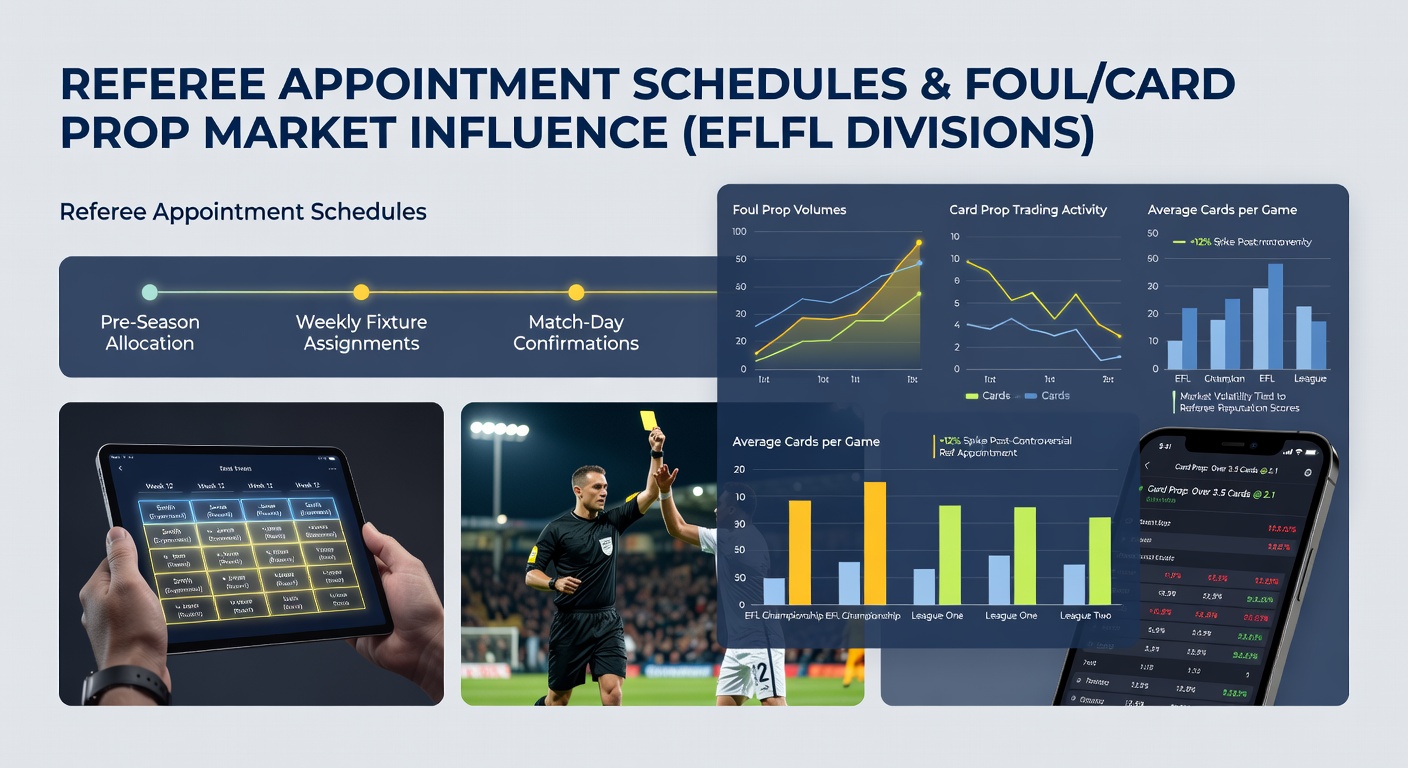
Division differences amplify these effects because League Two matches feature younger, more physical players who draw fouls at higher rates under certain officials, while Championship contests emphasize tactical discipline that reduces card frequency. Figures reveal that referees crossing between League One and the Championship adjust their foul thresholds upward by roughly 12 percent on average, according to aggregated match reports. This adjustment pushes prop markets to price in higher foul totals for cross-division loan players returning to lower leagues.
Data Sources and Statistical Trends
Comprehensive tracking by industry organizations shows that foul prop markets experience the widest swings when appointments include referees who favor early interventions in set-piece situations. A report compiled by Canadian sports data analysts highlights how these patterns hold steady across multiple EFL seasons, with card issuance rates varying by as much as 1.8 cards per game between the most lenient and strictest officials in the same division. Bettors monitoring these statistics gain clarity on where lines sit relative to expected outcomes once the referee schedule drops.
External factors such as fixture congestion around international breaks further interact with appointment patterns, yet the core influence remains tied to individual referee profiles. Observers note that sustained exposure to the same set of officials in promotion playoffs produces tighter card lines because markets price in familiarity with each referee's approach. This pricing stability contrasts with regular-season weeks when new appointments introduce greater variance.
Conclusion
Referee appointment schedules continue to serve as a foundational input for foul and card prop markets throughout the EFL, and the resulting line movements reflect documented patterns across all three divisions. Data from successive seasons demonstrates how advance knowledge of assignments allows markets to incorporate referee-specific tendencies efficiently, while division-level differences maintain distinct pricing behaviors for fouls versus cards. As the 2025-26 season approaches its May 2026 conclusion, these dynamics remain central to how prop betting responds to official rotations.