The Hidden Impact of Transfer Deadline Day Surprises on Early Season Market Adjustments in Lower Division Encounters
Written by Erik Berger · Aug 19, 2026
The Hidden Impact of Transfer Deadline Day Surprises on Early Season Market Adjustments in Lower Division Encounters
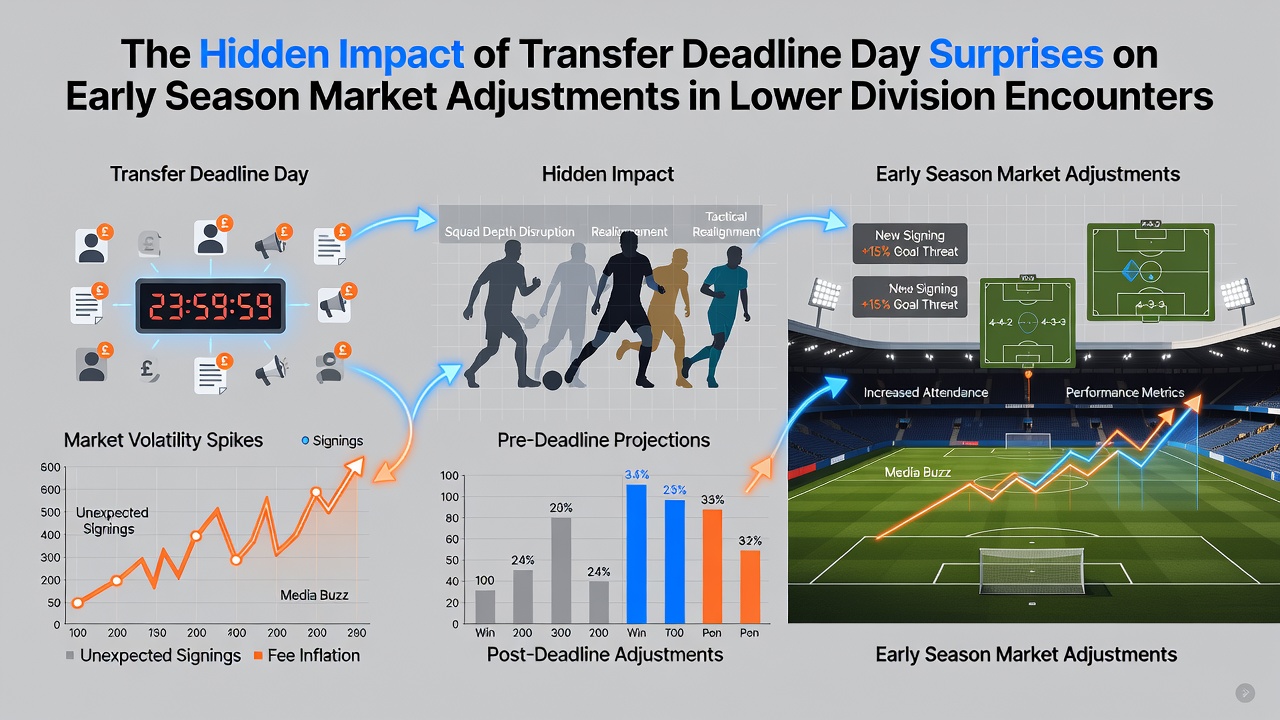
Transfer deadline day in lower divisions often produces unexpected moves that reshape squad compositions right before the new campaign settles into its rhythm, and observers note these late arrivals frequently trigger recalibrations in betting markets for the opening fixtures of August and September. Data from recent windows shows that clubs in League One and League Two complete a significant portion of their business in the final 48 hours, with many deals involving players who were not on original shortlists yet arrive with immediate squad roles. Such arrivals create ripples because they alter expected lineups and tactical setups that bookmakers had priced into early season odds.
Patterns in Lower Division Deadline Activity
Lower division encounters rely heavily on squad depth and quick integration of new personnel, whereas top flight clubs maintain larger rosters that absorb surprises more easily. Figures from the English Football League indicate that League Two sides averaged 3.2 incoming transfers after the penultimate week of the summer window in 2025, and analysts expect similar volumes heading into the August 2026 deadline. These numbers matter because they coincide with the period when early season fixtures begin and markets start adjusting lines based on updated team news.
Surprise elements surface when clubs secure players from rival leagues or through loans that were not publicly discussed until the final hours. One study published by researchers at the University of Loughborough examined how such moves influenced performance metrics in the first six matchweeks, and the findings revealed measurable shifts in expected goal values and clean sheet probabilities for affected sides. Bookmakers respond by revising handicap lines and total goal markets once confirmed lineups incorporate the new arrivals, creating windows where odds move before kickoff.
Early Season Market Reactions
Markets for lower division matches open weeks in advance, yet they remain fluid until squads stabilize after deadline day. When an unheralded striker joins a mid-table League One side on the final day, over/under lines for that club's opening fixtures often adjust by half a goal within 24 hours. Data compiled by industry tracking services shows average odds swings of 0.25 to 0.40 in total goals markets for teams that completed multiple late deals, compared with smaller movements for sides that finished their business earlier.

Loan deals finalized at the last moment add another layer because they frequently involve players whose fitness levels and tactical fit remain uncertain. Observers tracking EFL data note that sides receiving deadline day loans record higher variance in first half goal outputs during September fixtures, which in turn prompts bookmakers to widen ranges on half-time result markets. These adjustments reflect the difficulty of predicting immediate contributions from players who have trained with new teammates for only a few sessions.
Case Examples from Recent Windows
Take one League Two club that secured a central midfielder on loan from a Championship side in the final hour of the 2025 window. The player started the opening three matches, and betting markets for those fixtures saw the draw line compress by several points once his inclusion became certain. Similar patterns appeared across multiple clubs where defensive reinforcements arrived late, with under bet prices shifting as clean sheet probabilities were recalculated.
Another instance involved a forward whose permanent transfer from overseas was confirmed just before the deadline. Early season matches against promotion rivals saw over 2.5 goals lines move as the player's expected minutes increased projected scoring rates. Reports from the German Football League on comparable lower tier deadline activity highlight parallel effects in regional leagues, where late additions correlate with elevated goal tallies in the opening month.
Data Trends Across Multiple Seasons
Longer term analysis of lower division results after deadline day reveals consistent themes. Teams that completed three or more incoming deals in the final week posted an average points per game increase of 0.18 in their first five fixtures compared with the prior season average. While causation remains complex, the correlation appears in datasets maintained by academic groups studying football economics, including work affiliated with Canadian university sports analytics programs.
Market makers incorporate these trends into pricing models, yet residual uncertainty lingers because integration speed varies by individual. Consequently, live betting volumes rise during early season lower division games as bettors react to in-match performances of newly arrived players. Odds compilers adjust in real time, often widening spreads when an unexpected starter creates mismatches that were not fully priced pre-match.
Conclusion
Transfer deadline day surprises continue to influence early season market dynamics in lower divisions because they introduce variables that reshape expected outcomes right as fixtures commence. Data across recent windows demonstrates measurable adjustments in handicap, total goals, and half-time lines once late signings are confirmed. Those adjustments reflect both the statistical impact of new personnel and the inherent difficulty of forecasting rapid integration in resource-constrained environments. As the August 2026 window approaches, similar patterns are likely to emerge once clubs finalize their late business and markets recalibrate accordingly.