Tracing Nutritional Science Impacts on Player Stamina Metrics and How They Recalibrate Totals Lines in Extended Tournament Formats
Written by Kai Perry · Aug 3, 2026

Tracing Nutritional Science Impacts on Player Stamina Metrics and How They Recalibrate Totals Lines in Extended Tournament Formats
Nutritional science has reshaped how teams prepare athletes for the demands of long-format competitions, where match schedules stretch across weeks and recovery windows shrink. Data from sports performance studies indicate that targeted carbohydrate loading, protein timing, and hydration protocols directly influence glycogen stores and muscle endurance, which in turn affect how players maintain intensity during later stages of tournaments.
Core Elements of Nutritional Protocols in Modern Football
Teams track macronutrient intake with precision tools that measure individual responses to different fueling strategies, and researchers note that players following personalized plans sustain higher work rates in the final 30 minutes of matches. Studies from the Australian Institute of Sport demonstrate that optimized sodium and electrolyte balance reduces cramp incidence by measurable percentages, allowing squads to field consistent lineups rather than rotating heavily fatigued athletes.
Monitoring extends to micronutrients as well, since deficiencies in iron or vitamin D correlate with slower recovery times according to longitudinal data collected across multiple European leagues. These adjustments feed into broader preparation cycles that begin well before August 2026, when several clubs already test new supplement regimens ahead of congested international calendars.
Stamina Metrics and Their Measurement
Performance analysts quantify stamina through metrics such as high-intensity running distance, repeated sprint ability, and heart-rate recovery intervals collected via wearable devices. Figures from professional clubs show that players who maintain above-average glycogen levels post-halftime cover an additional 400 to 600 meters at high speed compared with those on standard diets. Such differences become pronounced in extended formats where matches occur every three or four days, and cumulative fatigue alters expected output.
Impact on Goal Scoring Patterns
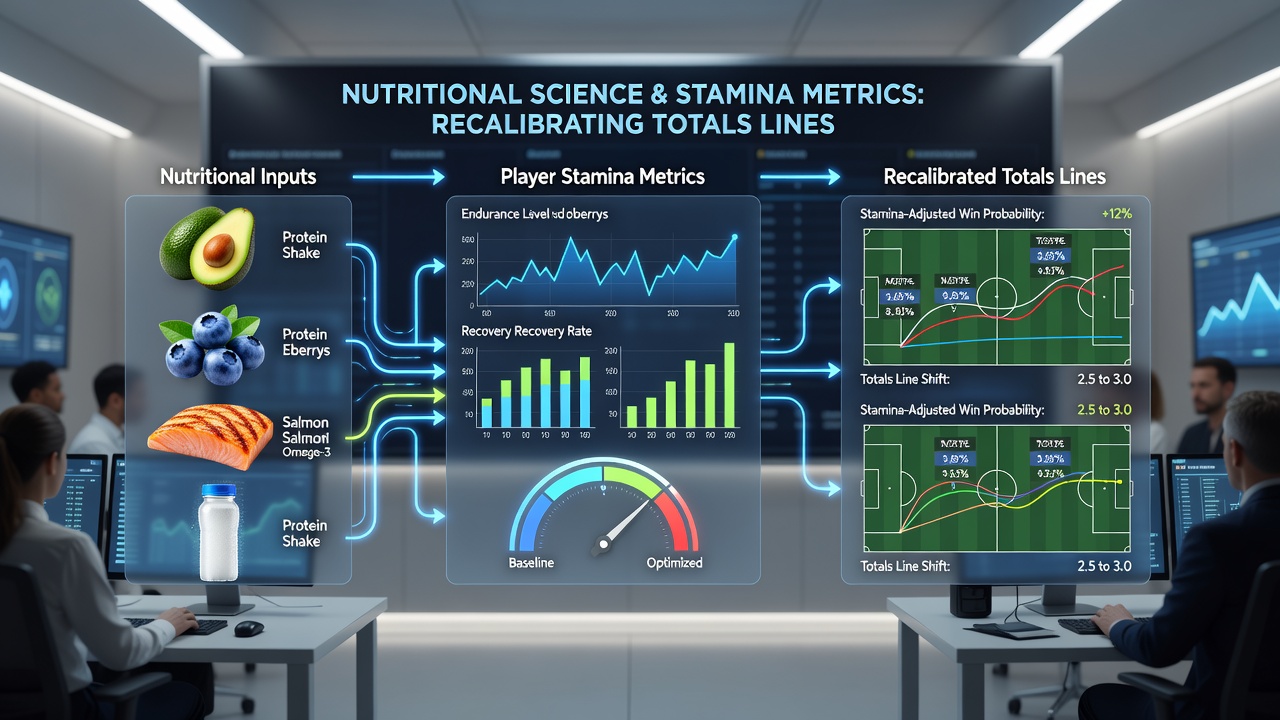
Lower stamina reserves often translate into fewer shots on target and reduced pressing intensity, which directly influences the number of goals scored in later rounds. Observers note that leagues and tournaments compile these patterns into predictive models that recalibrate totals lines before each stage advances. When nutrition programs improve recovery, teams sustain attacking pressure longer, shifting the statistical distribution of over/under outcomes that bookmakers use to set opening markets.
Recalibration of Totals Lines Across Tournament Stages
Bookmakers integrate stamina-related datasets when they adjust lines for knockout phases or group-stage finales, because evidence indicates that well-fueled squads produce more goals in extra time or additional matches. Reports from the European College of Sport Science highlight how carbohydrate periodization during multi-week events correlates with a 12 to 18 percent rise in second-half goal tallies for certain teams. Analysts therefore widen or narrow totals thresholds to reflect these updated performance baselines rather than relying solely on historical averages.
Real-time adjustments occur when injury reports or training-load data reveal that a squad has altered its nutritional approach mid-tournament. Such shifts prompt line movements that reflect the probability of sustained high-output play versus early defensive drops. In August 2026, several confederation qualifiers already incorporate these variables into pre-match modeling, since nutrition tracking apps feed live inputs into the same systems used for odds compilation.
Case Examples From Recent Extended Competitions
One documented instance involved a national side that implemented intra-match carbohydrate gels during a 2022 World Cup campaign, resulting in maintained sprint counts through extra-time periods and a measurable uptick in late goals. Similar protocols now appear across club competitions where fixture congestion amplifies the value of recovery nutrition. Those who study these patterns observe that totals lines move earlier in the week when teams publicize advanced dietary support for key players.
Another set of figures from South American qualifiers shows that squads with structured hydration plans experienced fewer substitutions for fatigue, which preserved attacking shape and produced higher average goal counts in the final matchweeks. These outcomes feed directly into the algorithms that set tournament-wide totals, creating a feedback loop between on-field nutrition science and market pricing.
Conclusion
Nutritional interventions continue to supply measurable inputs that reshape stamina tracking and, by extension, the totals lines offered in extended tournament settings. As data collection grows more granular, the connection between fueling strategies and goal distributions becomes tighter, prompting ongoing recalibrations that reflect actual performance sustainability rather than static historical benchmarks.