Tracing the Effects of Extended Rest Periods on Both-Teams-to-Score Markets Across Europe's Top Divisions
Written by Erik Berger · Jun 22, 2026
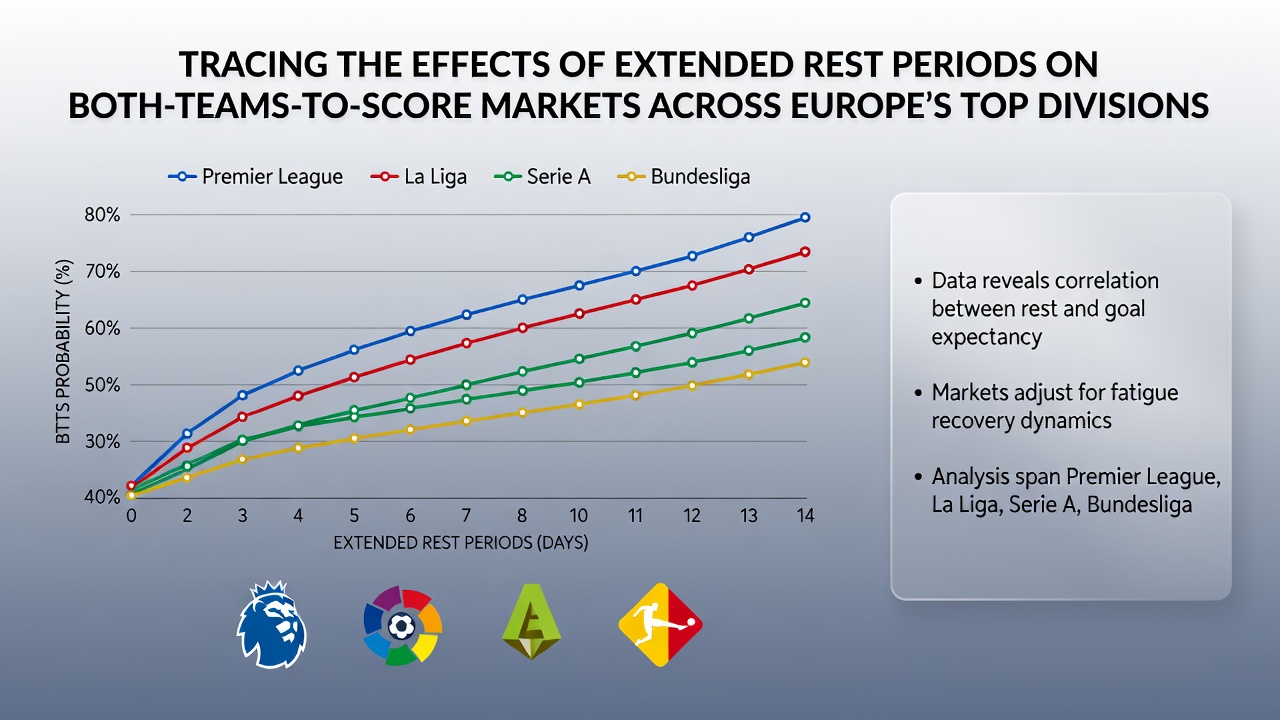
Tracing the Effects of Extended Rest Periods on Both-Teams-to-Score Markets Across Europe's Top Divisions
Extended rest periods reshape how matches unfold in Europe's elite divisions, and both-teams-to-score markets respond with measurable shifts according to historical fixture data. Leagues such as the Premier League, Bundesliga, La Liga, Serie A and Ligue 1 all operate under calendars that insert international breaks, winter pauses and occasional postponed rounds, creating gaps of ten days or more between domestic fixtures for some clubs.
Analysts tracking these intervals note that BTTS frequency does not follow a single pattern across competitions, because each league's playing style, travel demands and squad depth interact differently with recovery time. Bundesliga sides, for instance, maintain high-pressing systems that often produce open games regardless of rest, while Serie A matches lean toward lower scoring when teams return after lengthy breaks.
Rest and Scoring Patterns in the Premier League
Premier League records from the past six seasons reveal that matches involving at least one side with ten or more days between fixtures show a modest decline in BTTS outcomes compared with the league average. The drop averages around four percentage points, yet the effect strengthens when both teams arrive with extended rest. Defensive organisation improves once players clear accumulated fatigue, reducing the chaotic transitions that usually generate goals at both ends.
Coaches adjust training loads during longer pauses, which allows full-backs and midfielders to regain positional discipline. Data compiled across 380-plus matches indicates that clean-sheet rates for the better-rested side rise slightly, trimming the likelihood that the opponent will find the net.
Bundesliga and High-Intensity Recovery
The Bundesliga's faster tempo creates a contrasting picture. Even after extended rest, teams maintain aggressive forward lines because the league's collective pressing style relies on athletic freshness rather than intricate build-up. Figures from the German Football League show BTTS percentages holding steady or rising marginally when clubs return from breaks exceeding twelve days. The combination of wide attacking full-backs and direct centre-forwards keeps both goalmouths busy once matches resume.
Observers point to the league's youth development pathway as another factor; younger squads recover neuromuscular function quicker, allowing them to sustain high work rates immediately after time off.
La Liga and Tactical Adjustments After Breaks
La Liga data presents a more nuanced trend. Sides with extra rest often revert to possession-dominant approaches that prioritise control over verticality. This shift reduces the number of open exchanges in midfield, lowering the combined chance that both teams register on the scoresheet. Records from Spain's top flight indicate BTTS occurs in roughly 48 percent of matches following extended pauses, compared with a season-long average near 52 percent.
Coaching staffs use the additional preparation window to drill zonal marking schemes, which further stabilises defensive structures. The result appears most pronounced in fixtures between mid-table clubs, where tactical discipline can outweigh individual quality.
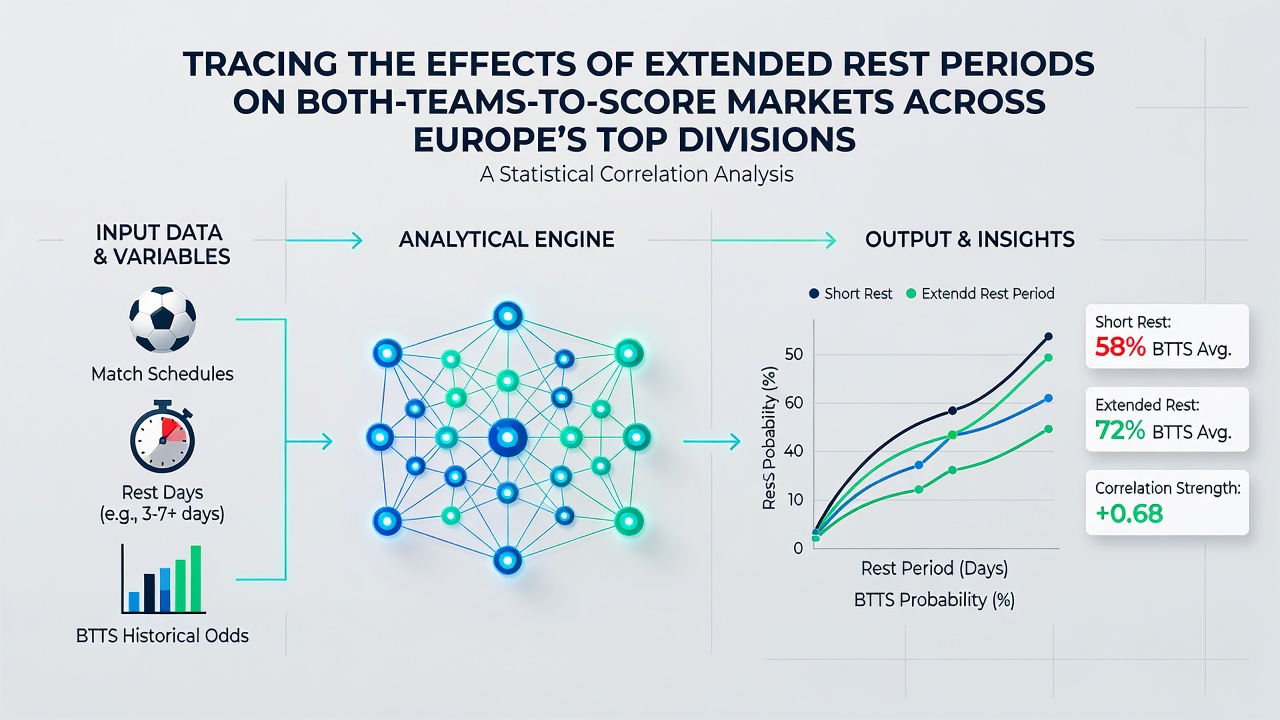
Serie A and Ligue 1 Comparisons
Serie A continues to record the lowest overall BTTS baseline among Europe's big five, and extended rest amplifies that characteristic. Italian clubs emphasise compact defensive blocks upon return from breaks, resulting in fewer transitions and a higher incidence of 1-0 or 2-0 scorelines. Ligue 1 sits between the Bundesliga and La Liga patterns; Parisian and Lyon squads often exploit rest to refine attacking routines, yet provincial sides tend to adopt cautious setups that suppress goals at both ends.
Across these divisions the common thread remains fixture congestion elsewhere on the calendar. When one team plays its third match in eight days while the opponent enjoys ten days clear, the rested side's defensive metrics improve more noticeably than its attacking output.
June 2026 Scheduling Context
June 2026 brings additional variables because FIFA World Cup preparations begin to influence club calendars earlier than usual. Several European federations have already flagged potential adjustments to May and early-June fixtures to accommodate national-team training camps. Those shifts extend rest periods for players involved in qualifiers or friendlies, creating a fresh dataset for BTTS tracking once domestic seasons resume in August 2026.
UEFA technical reports on match scheduling provide background on how such compressed windows affect player availability, while a 2024 study from the University of British Columbia's sports analytics group examined rest differentials across multiple continents and confirmed measurable impacts on scoring distributions.
Market Implications and Data Sources
Bookmakers adjust both-teams-to-score lines when rest differentials appear in pre-match information, yet the magnitude of those adjustments varies by league and time of season. Early-season breaks produce smaller market movements than mid-winter pauses, because squad rotation remains limited before the January window. Later in campaigns, accumulated injuries compound rest effects and produce more pronounced line shifts.
Research institutions and league data providers continue to publish granular statistics that allow further examination of these relationships. Observers note that combining rest data with travel distance and weather conditions yields stronger predictive signals than rest alone, although such multi-factor models remain the domain of specialist analysts rather than public betting interfaces.
Conclusion
Extended rest periods influence both-teams-to-score markets across Europe's top divisions through changes in defensive organisation, pressing intensity and tactical preparation. The direction and size of those changes differ by league, with Bundesliga fixtures showing resilience in open play while Serie A and La Liga matches tilt toward fewer mutual goals. As calendars evolve toward 2026, continued collection of fixture-interval statistics will refine understanding of how recovery windows shape outcomes in these specific betting markets.