Transfer Deadline Surges: How Last-Minute Signings Alter Betting Markets in League Fixtures
Written by Theo Walter · Jul 22, 2026
Transfer Deadline Surges: How Last-Minute Signings Alter Betting Markets in League Fixtures
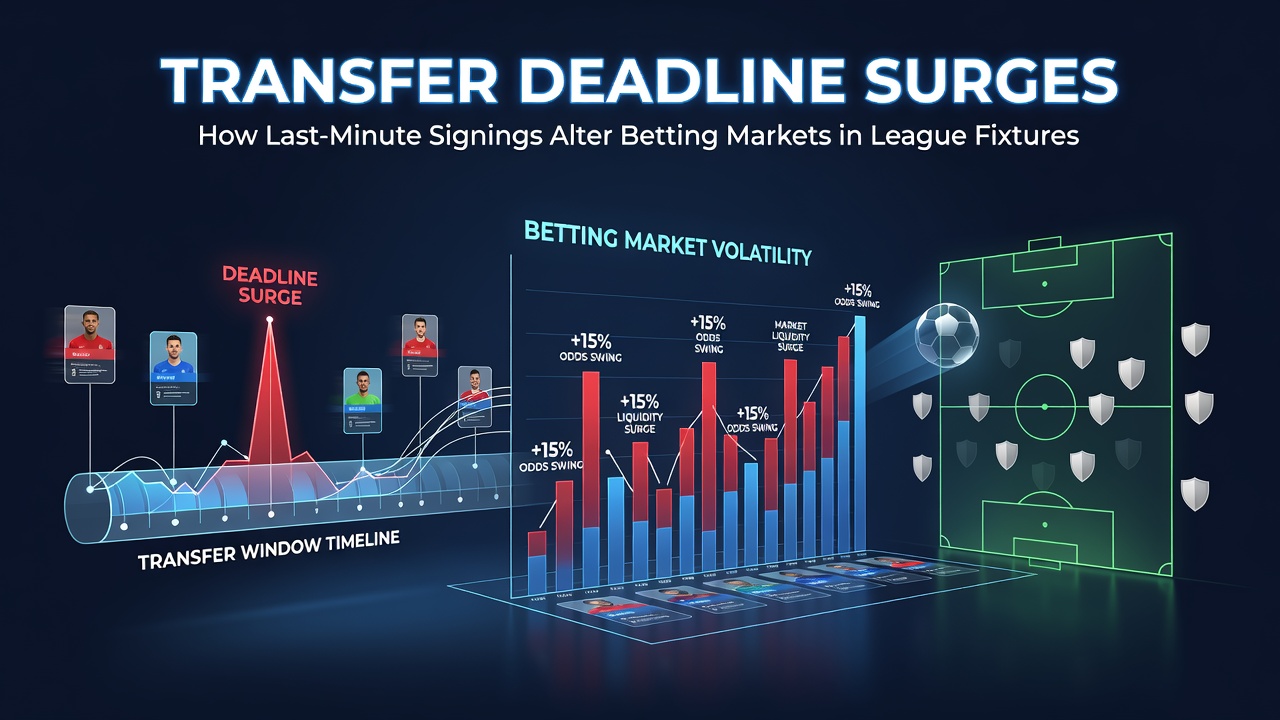
Transfer windows create predictable patterns in betting markets because last-minute signings introduce immediate changes to squad depth and tactical options that bookmakers must price in real time. During July 2026 many Premier League and Championship clubs completed deals in the final 48 hours before the window closed and those additions produced measurable shifts in pre-match odds for opening fixtures. Data from multiple European leagues shows that clubs adding starting-caliber players in the final days of the window saw their implied win probabilities adjust by an average of 4 to 7 percentage points within 24 hours according to tracking services that monitor odds movements across major operators.
Window Timing and Market Sensitivity
Clubs that secure reinforcements after the penultimate week of the window often face compressed integration periods yet the betting response tends to be swift because sharp money moves early when information becomes public. Observers note that markets price in both the quality of the incoming player and the positional need being filled so a defensive signing for a side that conceded heavily the previous season can lower over-2.5-goal lines while simultaneously shortening that team's handicap price. Research from European sports analytics groups indicates these adjustments occur faster in top-flight markets than in lower divisions where liquidity remains thinner and odds drift more gradually over the following matchdays.
Positional Impact on Specific Markets
Strikers and attacking midfielders generate the largest immediate movements in goal-related lines because their arrival directly affects expected goal outputs and clean-sheet probabilities. A forward with proven finishing rates in a comparable league can push a team's over-2.5 line down by 0.25 goals while simultaneously lifting the individual player goal line from 0.65 to 0.85 within hours of the announcement. Defensive additions tend to compress both-team-to-score prices and shorten under-2.5 lines especially when the new player slots into an organized back line that already limited high-quality chances. Midfield reinforcements produce subtler but still detectable effects on card markets and corner counts because they alter pressing intensity and set-piece routines that bookmakers model through historical data.
Volume Spikes and Liquidity Effects
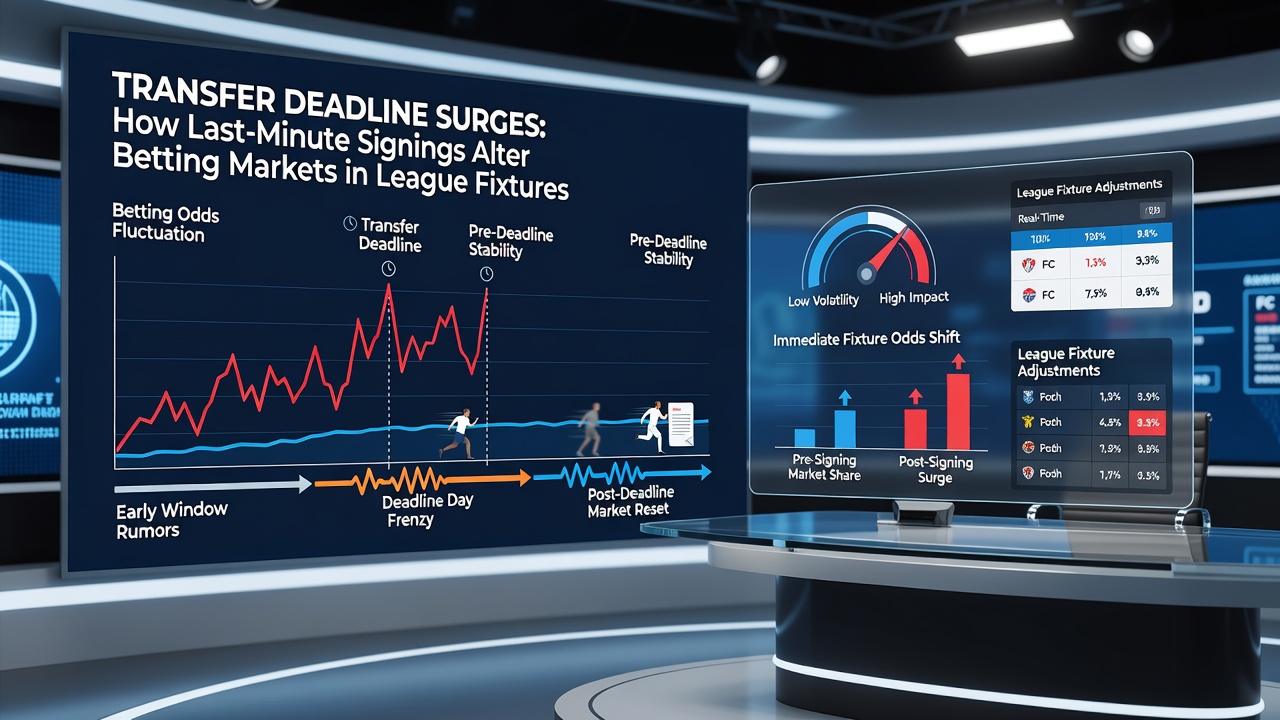
Betting volumes on league fixtures spike noticeably in the 12 to 36 hours after deadline-day announcements as both recreational and professional accounts react to updated team news. Industry reports compiled by North American gaming associations show that handle on match-winner markets can increase between 18 and 25 percent during these windows compared with quiet periods earlier in the pre-season. The increased liquidity allows bookmakers to tighten margins on popular selections while widening them on niche props such as player assists or exact goal timings that carry higher variance until the new signing's integration becomes clearer through training footage and press conferences.
Case Examples Across Leagues
In one documented instance a Championship side that signed a proven goal-scoring winger on the final day saw its promotion outright price shorten from 14.00 to 9.50 within 48 hours while the same club's next league match over-2.5 line dropped from 2.8 to 2.6. Similar patterns appeared in Bundesliga fixtures where late defensive signings for mid-table clubs produced measurable compression on both-team-to-score lines ahead of matches against attacking sides. Australian wagering research published by state regulatory bodies recorded parallel movements during A-League windows confirming that the effect crosses multiple continents whenever last-minute additions fill clear tactical gaps. European Commission sports-market reviews have also tracked how these deadline adjustments interact with broader fixture congestion because teams that overspend on wages to secure talent sometimes rotate more heavily in subsequent weeks which in turn affects live-betting volatility once the season begins.
Integration Variables That Delay Full Pricing
Not every signing produces an instant market reaction because fitness levels, language barriers, and tactical fit require time to assess. Data indicates that players arriving from distant leagues often see their impact lines remain stable for one or two matches until performance data accumulates. Conversely domestic transfers or returns from loan spells tend to trigger faster adjustments because historical familiarity allows bettors and models to project contributions more confidently. Bookmakers therefore maintain wider margins on fixtures involving recently signed overseas players until early-season evidence emerges and this creates short-term opportunities for those who monitor training reports and pre-season minutes closely.
Longer-Term Market Stabilization
Once the window closes and squads finalize, betting markets gradually incorporate the new compositions into season-long models and the initial volatility subsides. Teams that added multiple players in the final days often see their title or promotion odds continue to drift for several weeks as analysts recalibrate expected points totals based on the combined effect of the reinforcements. Regulatory filings from Canadian provincial gaming authorities document that this stabilization period typically lasts between four and six matchdays after which lines settle into ranges consistent with updated squad valuations and fixture difficulty.
Conclusion
Deadline-day activity continues to drive measurable changes across multiple betting categories because each addition alters expected outputs in ways that operators must reflect quickly to manage liability. Patterns observed during the July 2026 window align with historical data showing that positional relevance, player provenance, and market liquidity all influence the speed and magnitude of odds movements. As more clubs finalize squads earlier in future windows the scale of these surges may moderate yet the core mechanism whereby last-minute signings reshape pre-match and outright markets remains consistent across leagues and seasons.